
Last updated November 4, 2026
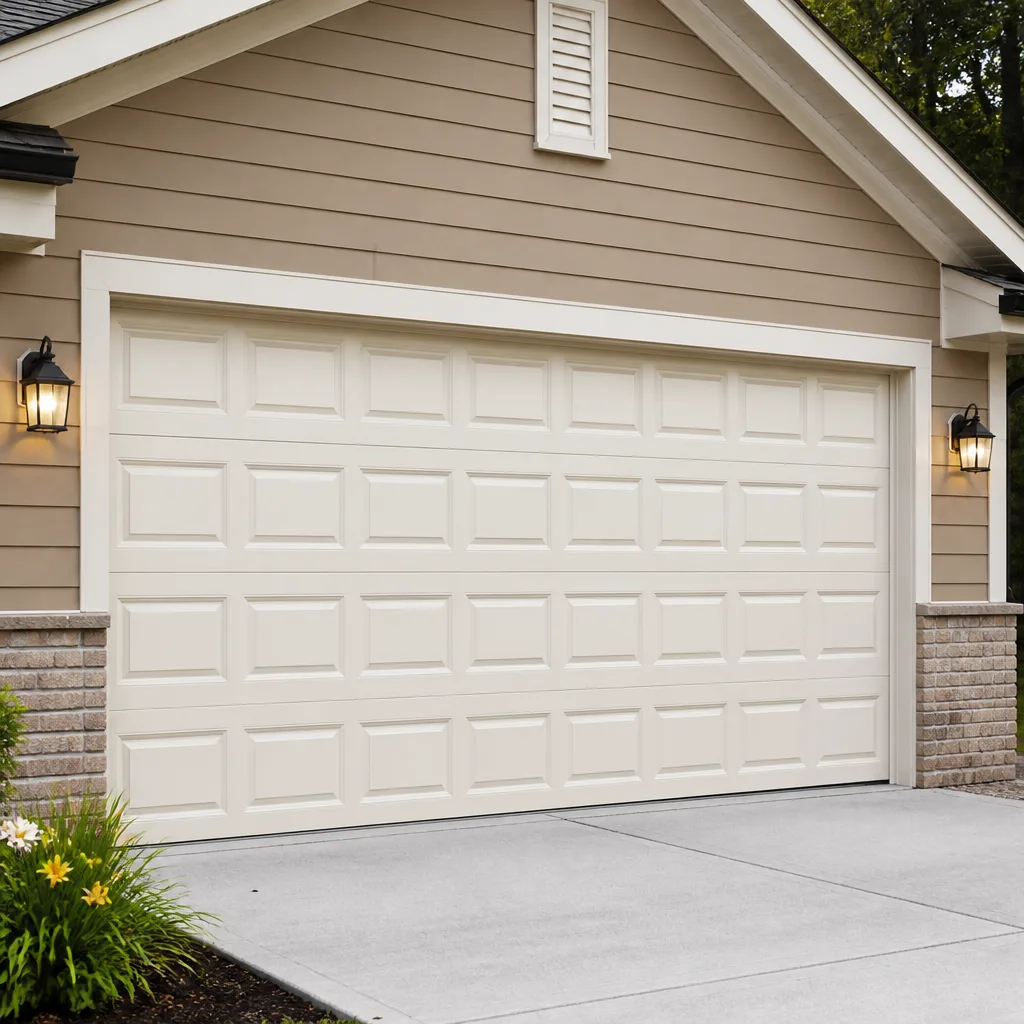 Raised-panel steel
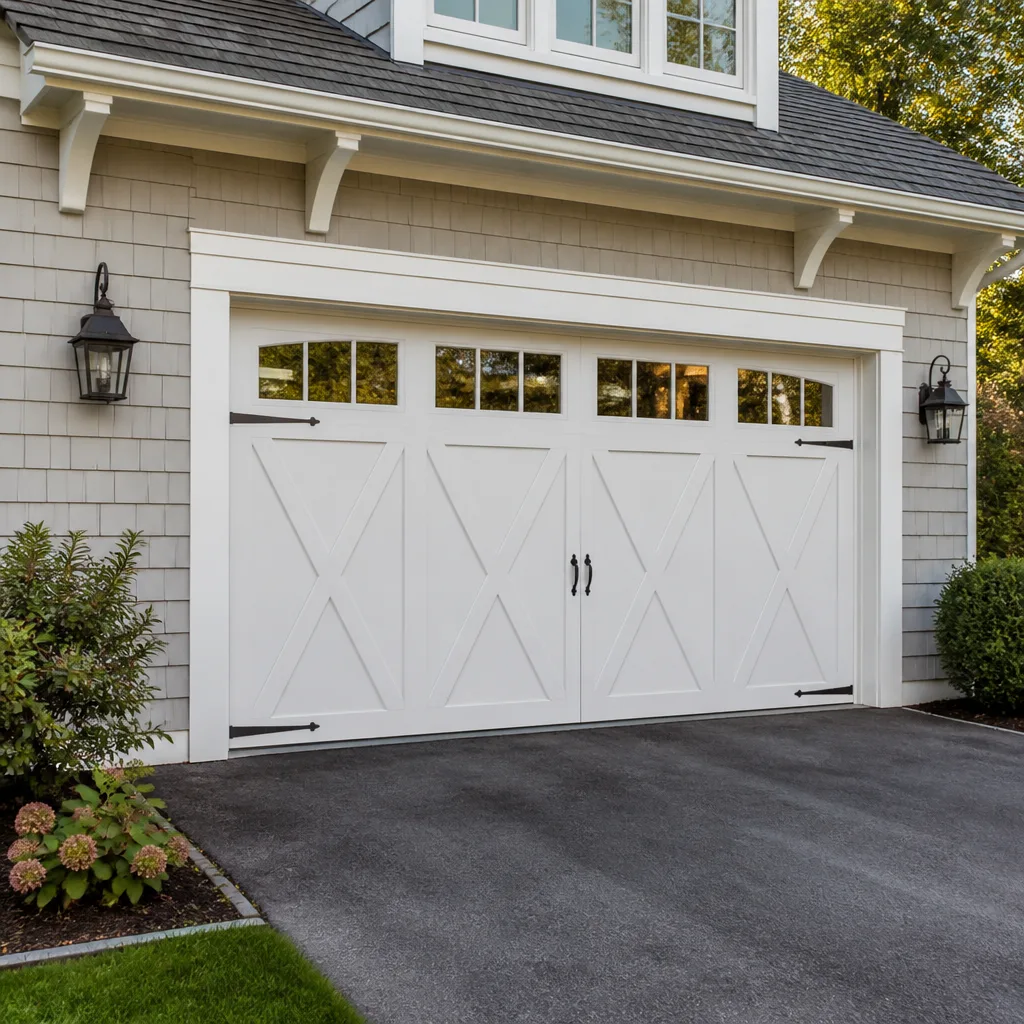 Carriage house
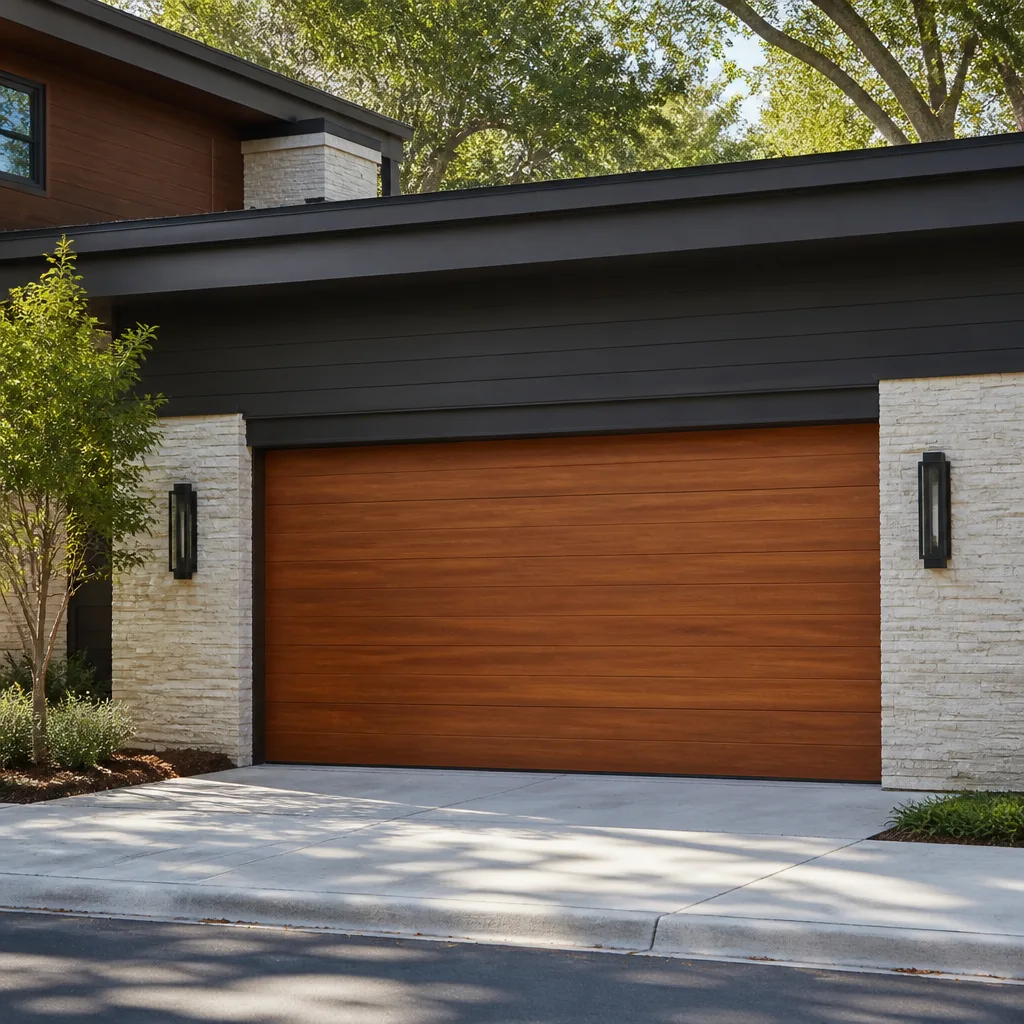 Modern flush
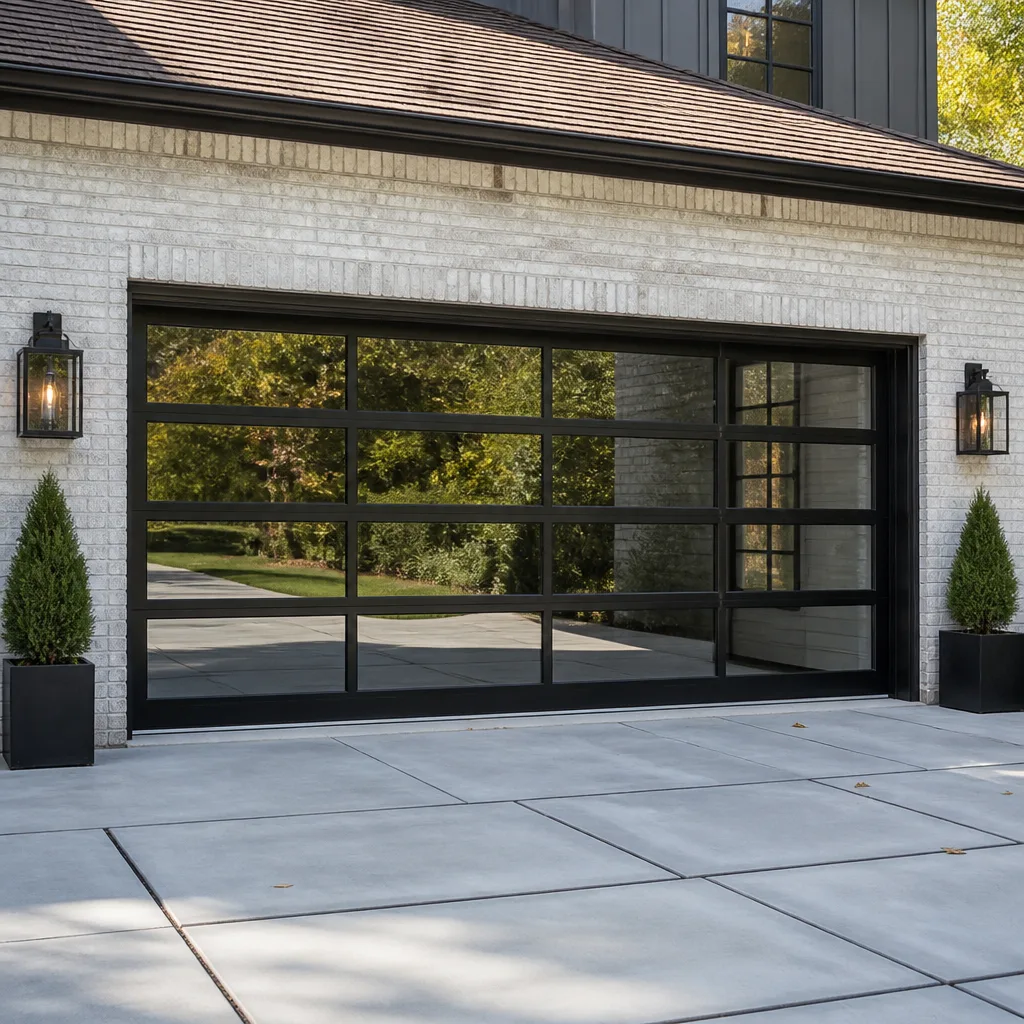 Full-view glass
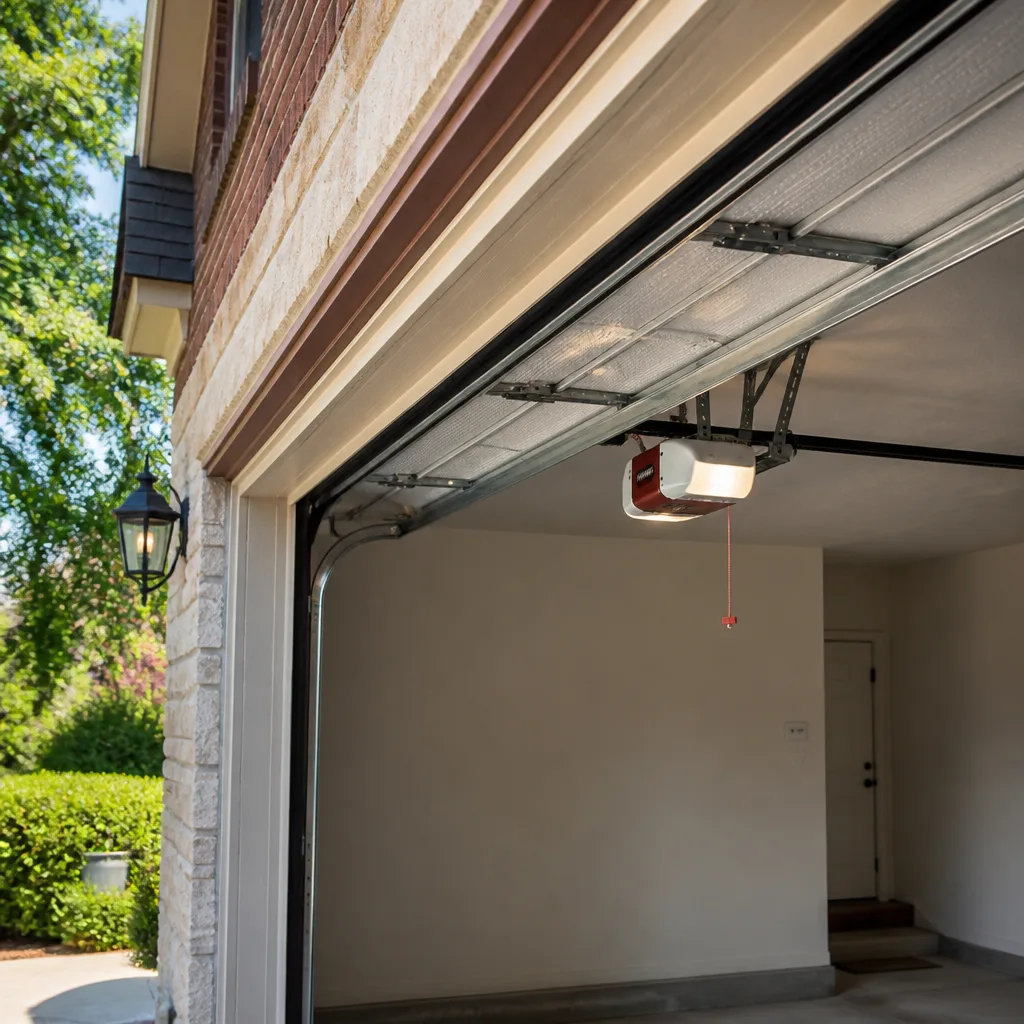 LiftMaster openers
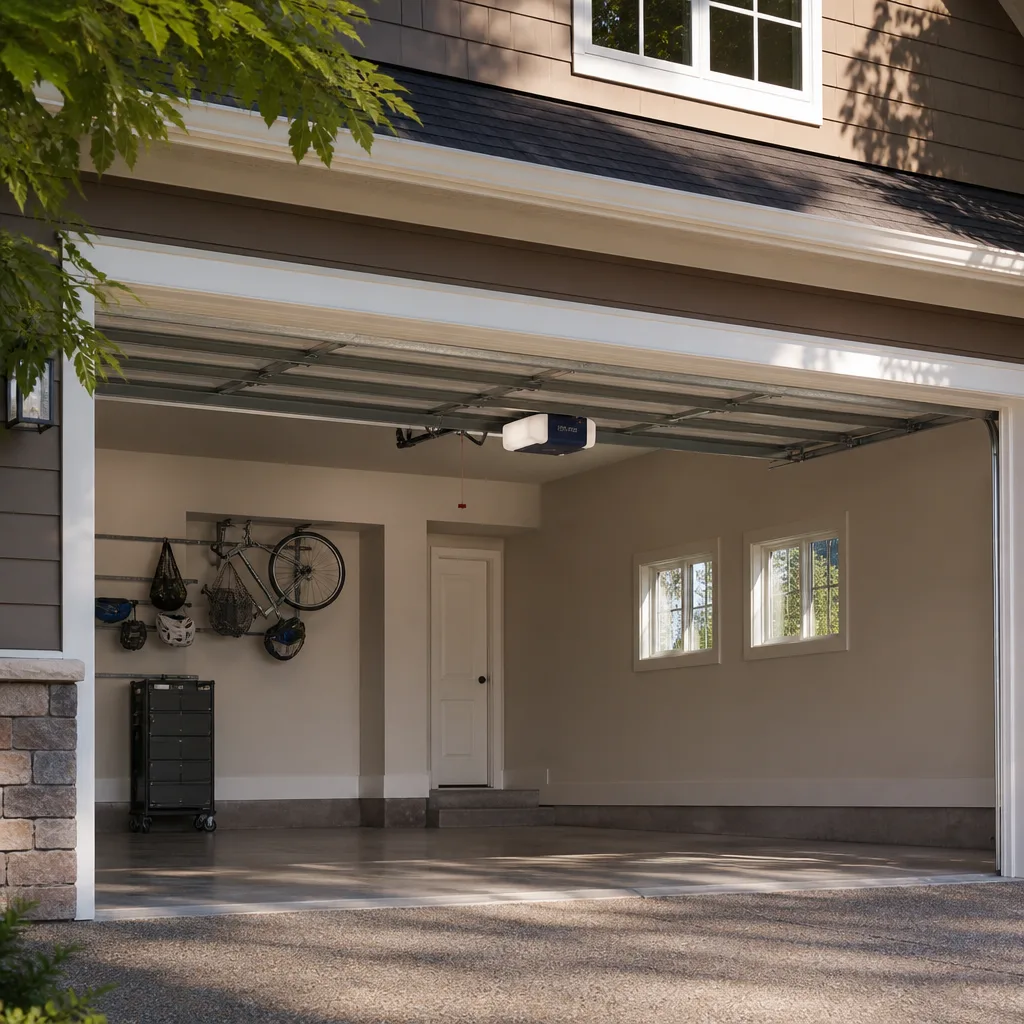 Chamberlain openers
Full 25-point door and opener safety check with every visit - springs, cables, rollers, tracks, and your LiftMaster or Chamberlain opener included
You get a price before we start. It does not change when the truck arrives.
Get your free estimateGarage Door Emergency Preparedness Guide for Valencia Homes
Every emergency prep list for Valencia homeowners includes water, flashlights, and first aid kits. Nobody thinks about the garage door until it won’t open. That’s a problem because the garage door is the largest moving object in your home, the primary entry point for most families, and in a real emergency, it can become either your best exit or a 400-pound barricade. During the 2019 Public Safety Power Shutoffs in the Santa Clarita Valley, thousands of homeowners discovered their emergency release cord had never been tested. They found out at 11 PM in a dark garage that the cord doesn’t always work the way the YouTube video showed. This guide covers the emergency scenarios specific to Valencia: PSPS outages, earthquake damage, and post-Santa Ana wind failures. By the time you finish reading, you’ll know exactly what to do before, during, and after each one.
Quick Answer
Garage door emergency preparedness for Valencia homes means three things: knowing how to manually open your door during a PSPS outage, knowing how to inspect for earthquake damage before operating the door, and knowing how to secure or close a door damaged by high winds. You should test your emergency release cord at least twice a year, verify your backup battery under load before fire season, and keep a clear path to your manual release at all times. If the door is damaged, don’t force it. Call (833) 754-9103. We answer 24/7. Fast dispatch from 7am to 7pm, Sunday through Friday.
Styles & brands we work with
- Raised-panel steel
- Carriage house
- Modern flush
- Full-view glass
- LiftMaster openers
- Chamberlain openers
Table of Contents
- How Valencia PSPS Outages Affect Your Garage Door
- How to Manually Open Your Garage Door During an Outage
- Chamberlain, LiftMaster, and Genie Release Differences
- California’s 2019 Backup Battery Law and How to Test Yours
- Post-Earthquake Door Inspection: Before You Touch That Button
- What to Do When Your Door Won’t Close After a Wind Event
- Securing a Garage Door That’s Stuck Open After a Disaster
How Valencia PSPS Outages Affect Your Garage Door
SCE Public Safety Power Shutoffs are a fact of life in Valencia. When the wind picks up and the humidity drops, Southern California Edison cuts power to reduce wildfire risk. That means your garage door opener, which runs entirely on household current, becomes dead weight. If you have an opener manufactured after 2019 in California, it has a battery backup installed by law. If you have an older opener, or if the battery backup has never been replaced, you’re dealing with a fully electric door and no electricity.
The problem compounds quickly. Valencia homes are built around the car. Most families enter and exit through the garage, not the front door. When the power cuts, the garage becomes an impassable wall unless you know exactly how to release the door from the opener. And if the outage hits while the door is open, you need to decide whether to close it manually and lose your car’s access, or leave it open and unsecured. Neither is ideal, but knowing your options before midnight makes the decision easier.
In our experience, most homeowners in Valencia have never pulled their emergency release cord. They assume it works like the videos show: one firm pull, door unlocks, you lift it by hand. That’s true on a balanced door. It’s not true on a door with a broken spring, a warped track, or an opener that was installed with excessive downward force. Emergency preparedness means testing the system when there’s no emergency, so you know what a healthy door feels like versus one that needs garage door repair before the next PSPS event.
How to Manually Open Your Garage Door During an Outage
The manual release mechanism exists for exactly this scenario. But the steps are only simple when the door is balanced and the release cord is in good condition.
- Clear the area. Move anything stored under the door’s path. In an emergency, garage clutter becomes a trip hazard in the dark.
- Locate the emergency release cord. It’s the red rope or handle hanging from the opener rail, usually near the motor unit.
- Pull the cord firmly downward and toward the door. You’ll hear a click as the trolley disengages from the opener carriage.
- Lift the door by hand. Use the handles or the bottom edge. A balanced door should lift smoothly. It should stay open on its own around chest height.
- If the door feels heavy, resists, or drops back down, stop. You have a broken spring or a different mechanical failure. Forcing it can cause injury or further damage.
A word on safety: garage door springs are under extreme tension. The torsion spring above the door and the extension springs along the tracks store enough energy to lift several hundred pounds. If a spring breaks during manual operation, the door can fall with enough force to cause serious injury. Never stand directly under a partially open door. Never remove the spring or attempt to adjust it yourself. That is a job for a trained professional. For Garage Door Repair Valencia homeowners facing this situation, the safest move is to call for help and leave the door as it is.
Chamberlain, LiftMaster, and Genie Release Differences
Not all emergency release cords work the same way. The differences are subtle but matter in the dark, in a hurry, with a flashlight clamped under your chin.
Chamberlain and LiftMaster openers use an identical release mechanism, which makes sense because they’re the same parent company. The release cord hangs from a trolley on the rail. You pull it straight down, and a spring-loaded latch releases the trolley from the carriage. The cord typically has a red plastic handle. After the power comes back, you re-engage by pulling the cord again while the opener runs, or by pressing the wall button, depending on the model.
Genie uses a different trolley design on many residential models. The release cord often has a small T-handle rather than a simple rope. The pull direction matters: you pull downward and toward the motor unit, not toward the door. On older Genie screw-drive models, the release is a lever on the rail rather than a hanging cord. If you’re reaching overhead and can’t find the cord, check your manual before the emergency happens.
We work on all three, plus garage door opener repair for the full range of residential brands. The point isn’t to memorize every variation. It’s to test your own release mechanism twice a year during daylight, so the first time you use it isn’t during a PSPS blackout. If you can’t release the door in under a minute during a drill, you won’t be able to do it at 11 PM with no power.
California’s 2019 Backup Battery Law and How to Test Yours
California law changed the game in 2019. SB 969 required all garage door openers sold or installed in the state after July 1, 2019 to include a battery backup. The intent was straightforward: prevent people from being trapped in or out of their garages during PSPS events and other outages. If your opener was installed in Valencia after that date, it has a battery backup built in. If it’s an older unit, it might not.
But here’s what the law doesn’t tell you: batteries wear out. The typical backup battery lives in a sealed compartment on the motor unit. It loses capacity over time, like any rechargeable battery. After three to five years in a hot garage, it might hold enough charge to open the door once, or not at all. The battery indicator light on the opener gives some information, but the only real test is to unplug the opener and try the door.
To test yours: unplug the motor unit from the ceiling outlet, press the wall button, and see if the door opens at full speed. Then close it. Then open it again. If it works twice at full speed, your battery is healthy. If it slows down, beeps, or fails on the second cycle, the battery needs replacement. Do this test before fire season, not during the first PSPS outage of the year. And if the battery is dead, you still have the manual release as backup. For opener questions, garage door opener repair is a service we handle directly, not a side task.
Post-Earthquake Door Inspection: Before You Touch That Button
Valencia sits in earthquake country. The 1994 Northridge quake and the 2019 Ridgecrest sequence both sent tremors through the Santa Clarita Valley. When the shaking stops, the instinct is to open the garage door and check the outside. Don’t. Not yet.
An earthquake can shift the framing around the garage opening. Even a fraction of an inch of movement can rack the door. The vertical tracks that were parallel become slightly misaligned. The door itself, which rolls on those tracks, binds. If you press the opener and the door fights the track, you’ll bend panels, strip gears, or burn out the motor. Worse, a door that binds and releases can snap a cable or drop unexpectedly.
- Inspect from inside without touching anything. Look at the vertical tracks. Check whether they’re still parallel to the door. Look at the gap between the door and the jambs on both sides. It should be even top to bottom.
- Check the torsion spring. Is it in one piece? A broken spring is an obvious sign the door should not be operated.
- Check the cables. Are both side cables taut and seated in their drums? A slack cable means the door is no longer balanced.
- Check the floor. A new crack across the garage slab near the door opening can mean the foundation shifted. That affects the door’s alignment even if the tracks look fine.
- Operate the door manually first. Release the opener and try lifting by hand. It should feel the same as it did during your last drill. If it binds, scrapes, or feels heavier on one side, stop and leave it.
If the door passes all five checks, you can open it with the opener. If anything looks or feels off, treat the door as unusable until it’s professionally inspected. The cost of a service call is less than the cost of a new panel or a snapped cable through the wrong place.
What to Do When Your Door Won’t Close After a Wind Event
Santa Ana winds hit Valencia hard. They arrive in the fall, gust to 50 or 60 mph in the passes, and they carry enough debris to wrench a garage door out of its track. After a wind event, the most common complaint we hear is a door that won’t close. It starts down, hits something, and reverses. Or the opener runs and nothing moves. Or one side of the door hangs lower than the other.
Here’s the priority-order checklist:
- Check the safety sensors first. Wind-driven debris can knock the photo eyes at the bottom of each track out of alignment. If the sensors are misaligned, dirty, or blocked, the door will refuse to close. Look for a solid light on each sensor. Wipe the lenses. Straighten their brackets.
- Check the tracks. A hard gust can bow a vertical track. Run your hand along the inside edge, where the rollers travel. Any dent, crease, or gap between the track and the jamb is a problem. A door that jumps its track will not close, and forcing it will peel the track off the wall.
- Check the cables. If one cable has come off its drum, the door will lift unevenly and bind. Do not try to re-seat it by hand. The spring tension can spin the drum and take fingers with it.
- Check the panels. A wind-driven branch or trash can leaves a dent. On steel doors, a substantial dent can flex enough to bind the hinges. On some models from Amarr and Wayne Dalton, the panel sections are form-fitted and won’t tolerate even moderate deformation.
If the sensors are clean and aligned but the door still won’t close, leave it open and call for help. A door that binds on the way down is dangerous. And a door that reverses incorrectly can come down hard enough to damage a car or injure a person. We see this pattern every Santa Ana season.
Securing a Garage Door That’s Stuck Open After a Disaster
This is the scenario nobody prepares for: the power is out, the door is stuck open, and you can’t close it. During a normal week, an open garage is an invitation. After a natural disaster, it’s worse. Looting, opportunistic theft, and even displaced wildlife all become factors when the neighborhood is dark and emergency services are stretched thin.
If the door is jammed in the open position and you can’t move it, your priority is securing the opening. Here’s what works:
Secure the interior door first. Most Valencia homes have a door between the garage and the house. Lock it. Add a bar or a chair under the handle. That single door is often the only thing stopping someone in the garage from walking into your living room.
Anchor the bottom edge of the stuck door. If the door is up but the tracks are intact, it may stay put. But if the tracks are damaged, the door could creep down on its own. Place something under the door’s edge to prevent an unexpected drop: a couple of heavy toolboxes, a stack of lumber, anything that won’t crush easily.
Use cable locks through the tracks. On doors from Craftsman, Raynor, and other residential brands, the vertical tracks usually have pre-drilled holes near the top. You can run a padlock or a heavy cable lock through a track hole to keep the door from being pulled shut, which prevents someone from using the garage as cover. If the door is up and jammed, put the locks through the track below the bottom roller.
Cover the opening. If the door is damaged beyond holding, a tarp or plywood sheet screws in faster than you think and keeps the worst of the weather, animals, and opportunistic eyes out. Valencia doesn’t get freezing weather, so this isn’t about insulation. It’s about keeping a disaster from turning into a break-in.
Finally, call us. Valencia homes deserve a door that opens and closes when you need it to. We answer 24/7. Fast dispatch from 7am to 7pm, Sunday through Friday. We’ll get someone to you as soon as the schedule allows, and we’ll tell you up front what the repair involves before any work starts.
Common Mistakes to Avoid
- Never testing the release cord until the power goes out. The worst time to learn that your release cord is seized, wrapped around the rail, or too short for you to reach is during a blackout. Test it twice a year, when the sun is up and you have time to fix what’s wrong.
- Assuming the backup battery works because the opener is new. California’s 2019 law mandates the battery, but it doesn’t mandate testing it. Batteries die in hot garages, and Valencia summers in the Santa Clarita Valley are unkind to sealed lead-acid and lithium cells alike. Test yours before fire season.
- Pressing the opener repeatedly after an earthquake. Each time you press the button on a misaligned door, you’re stressing the panels, cables, and opener. If the door doesn’t open on the first try, stop and inspect.
- Re-seating a cable by hand. We can’t emphasize this enough: the spring system stores enough energy to take a finger, a hand, or worse. Cables that come off drums are a job for a professional with the right tools and experience.
- Leaving the interior garage door unlocked during a PSPS outage. The power outage is stressful enough without adding a burglary to it. Lock the door that connects the garage to the house, and keep a manual key hidden where you can find it in the dark.
- Ignoring a door that’s hard to lift manually. A balanced door lifts with one hand. If yours takes both arms, or it won’t stay open, something is wrong. The time to address it is before the next emergency, not during it.
- Waiting until the door breaks to find a garage door company. When the door is stuck and the wind is howling, you don’t want to be reading reviews for the first time. Know who you’ll call before you need them.
See the difference
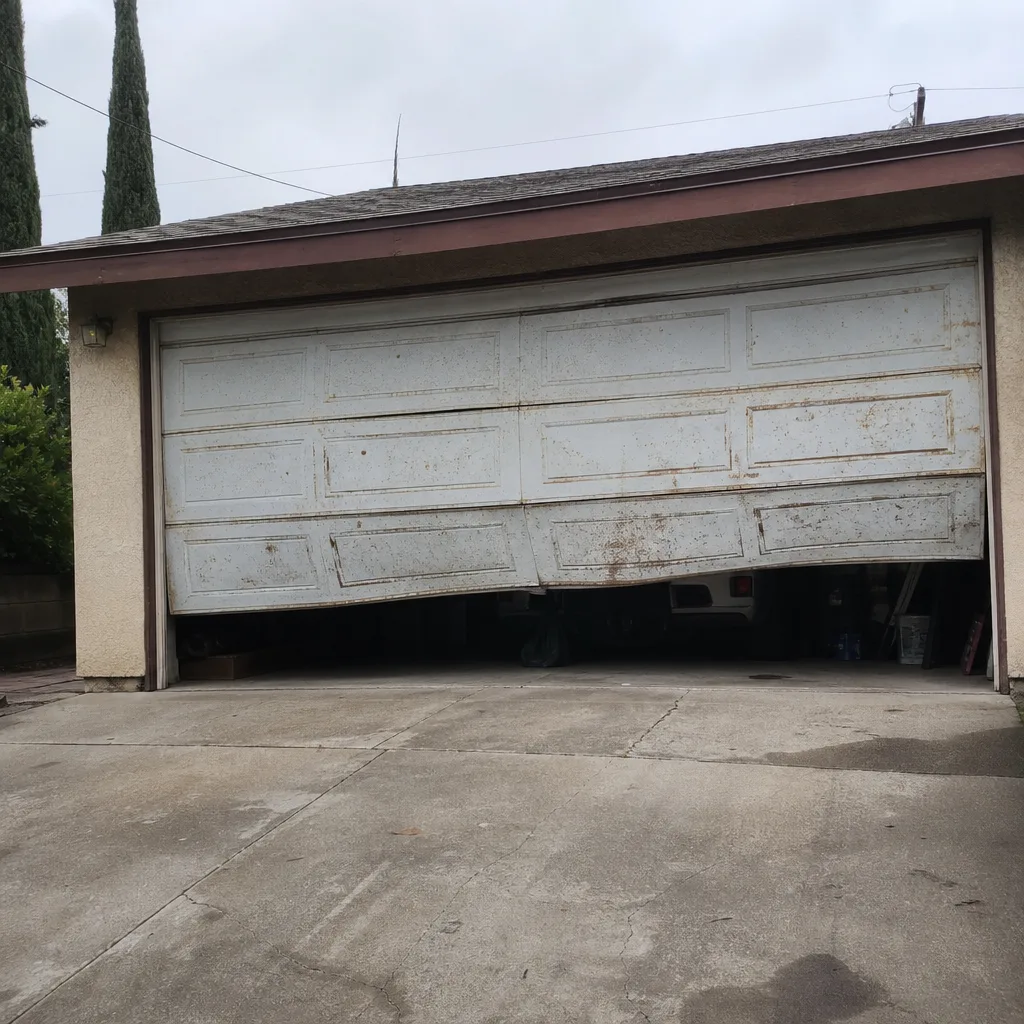 Before
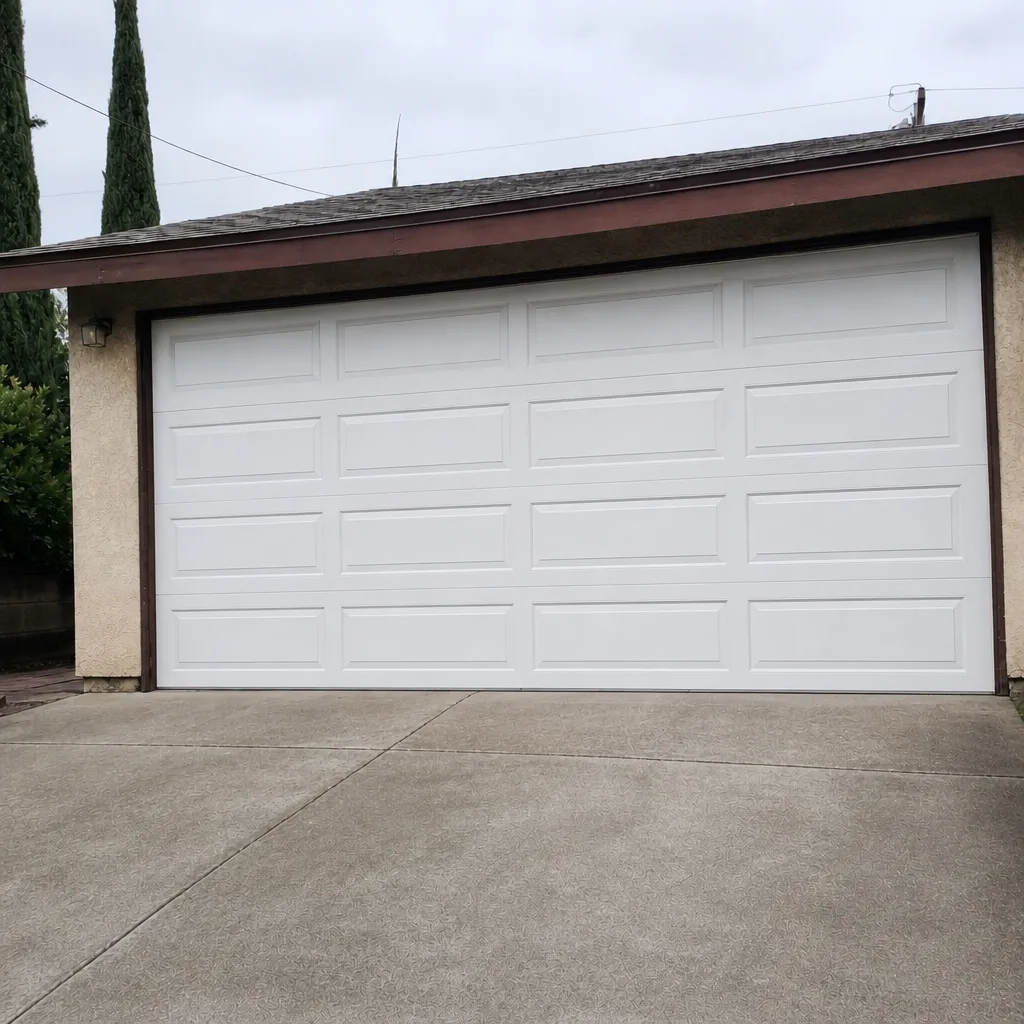 After
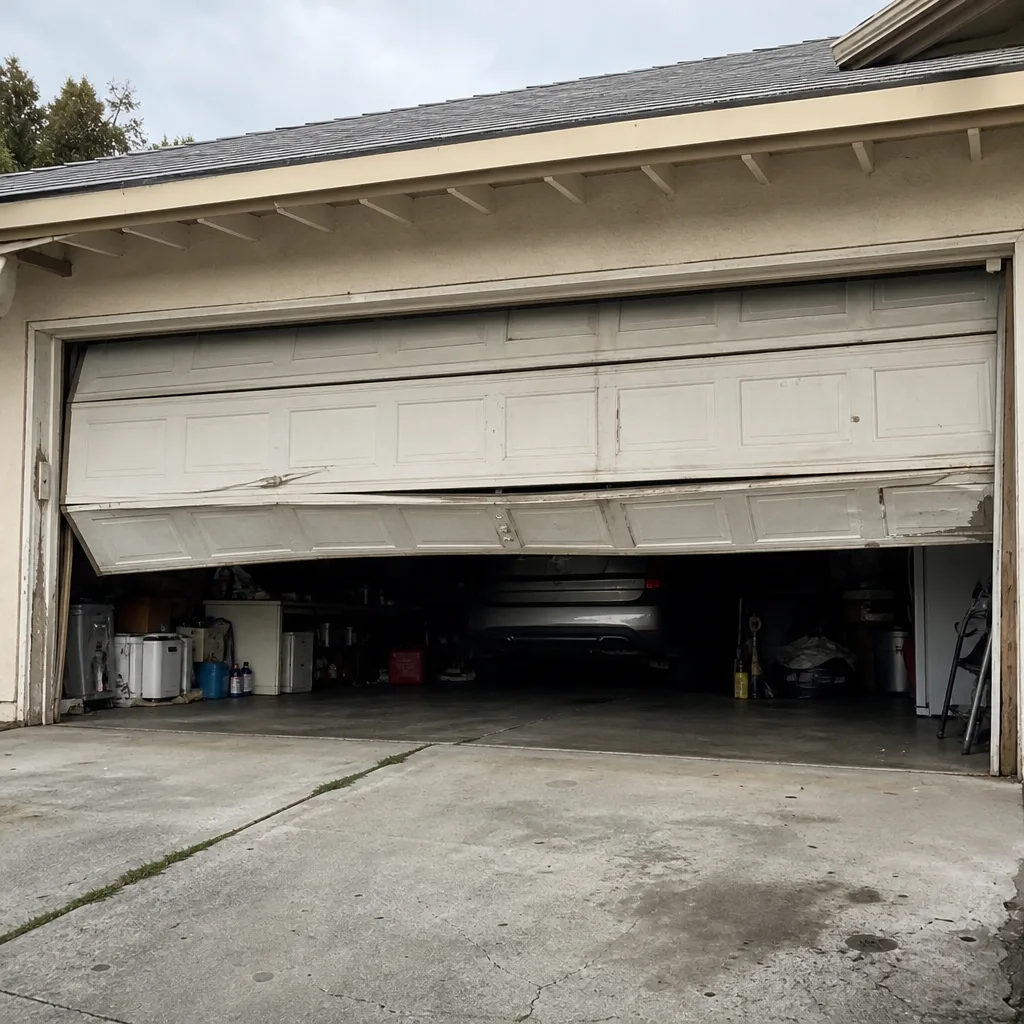 Before
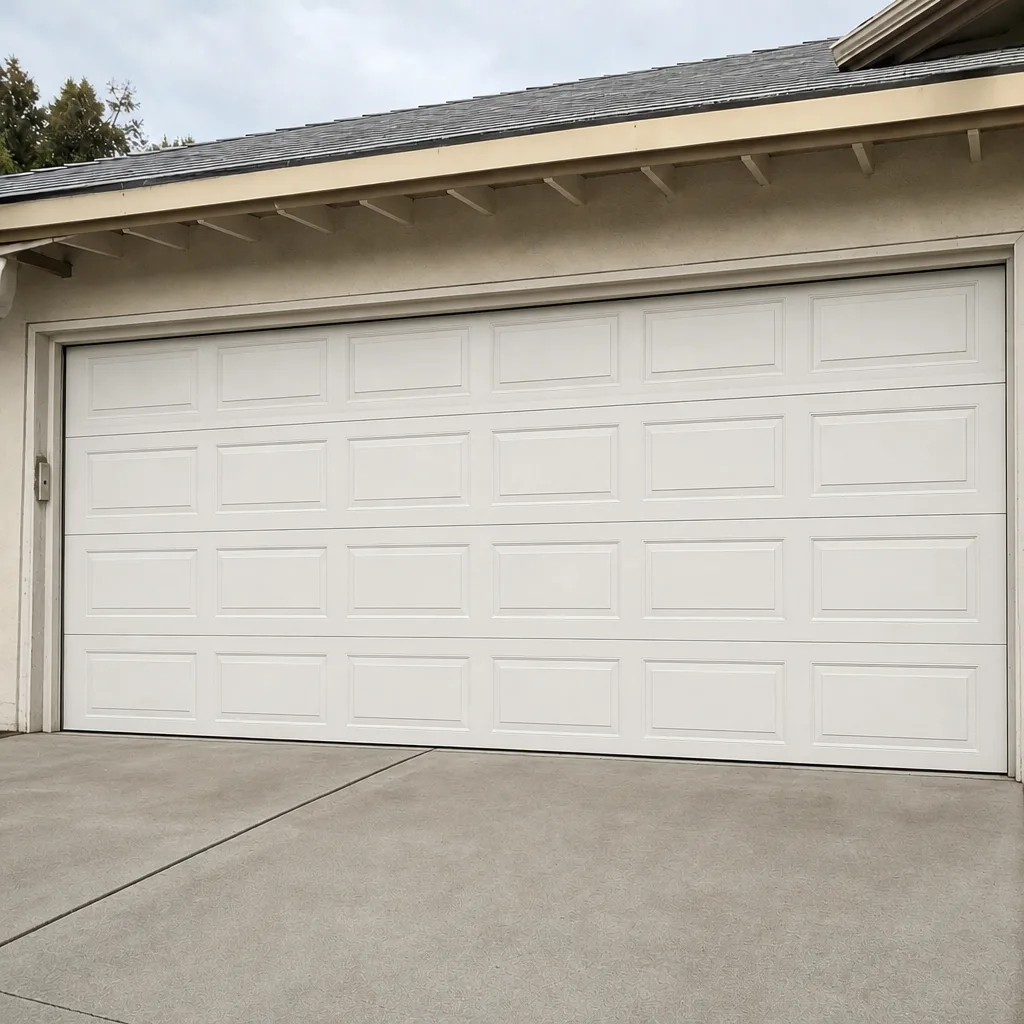 After
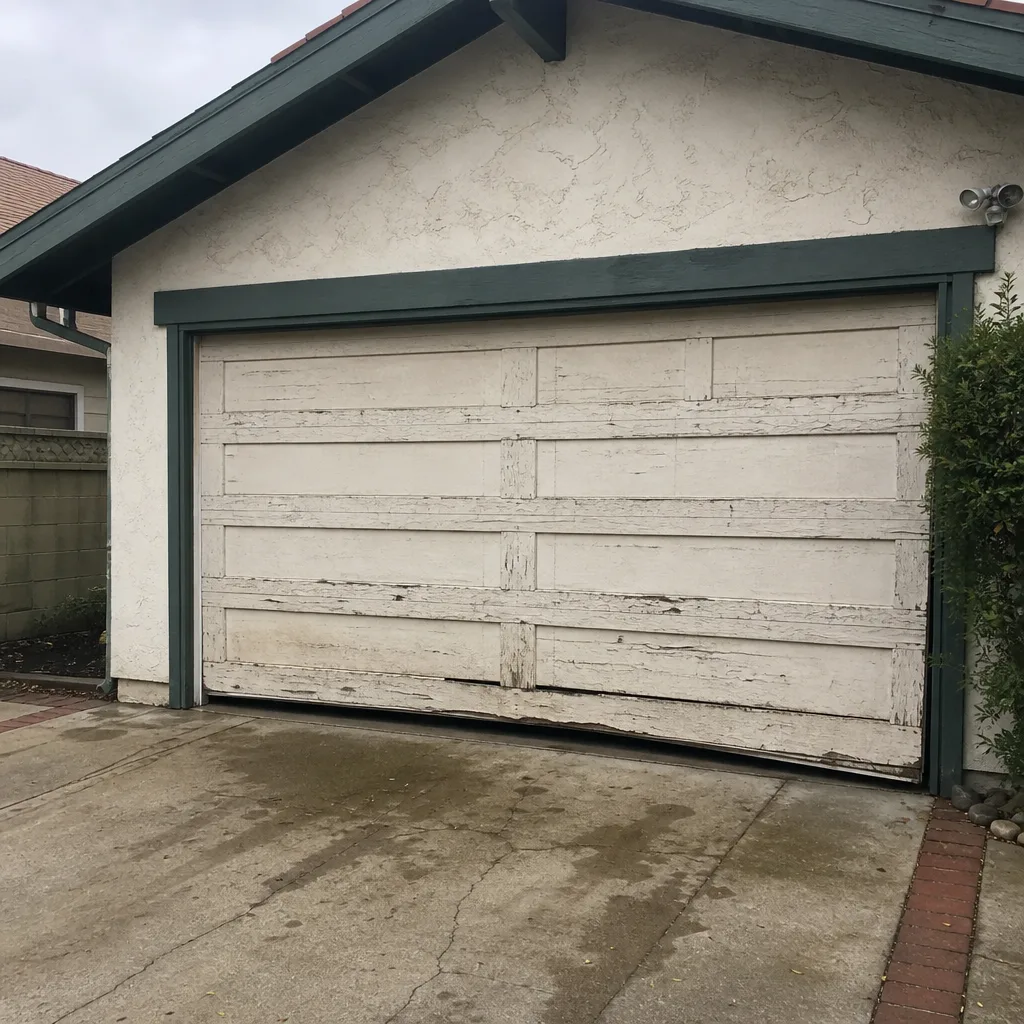 Before
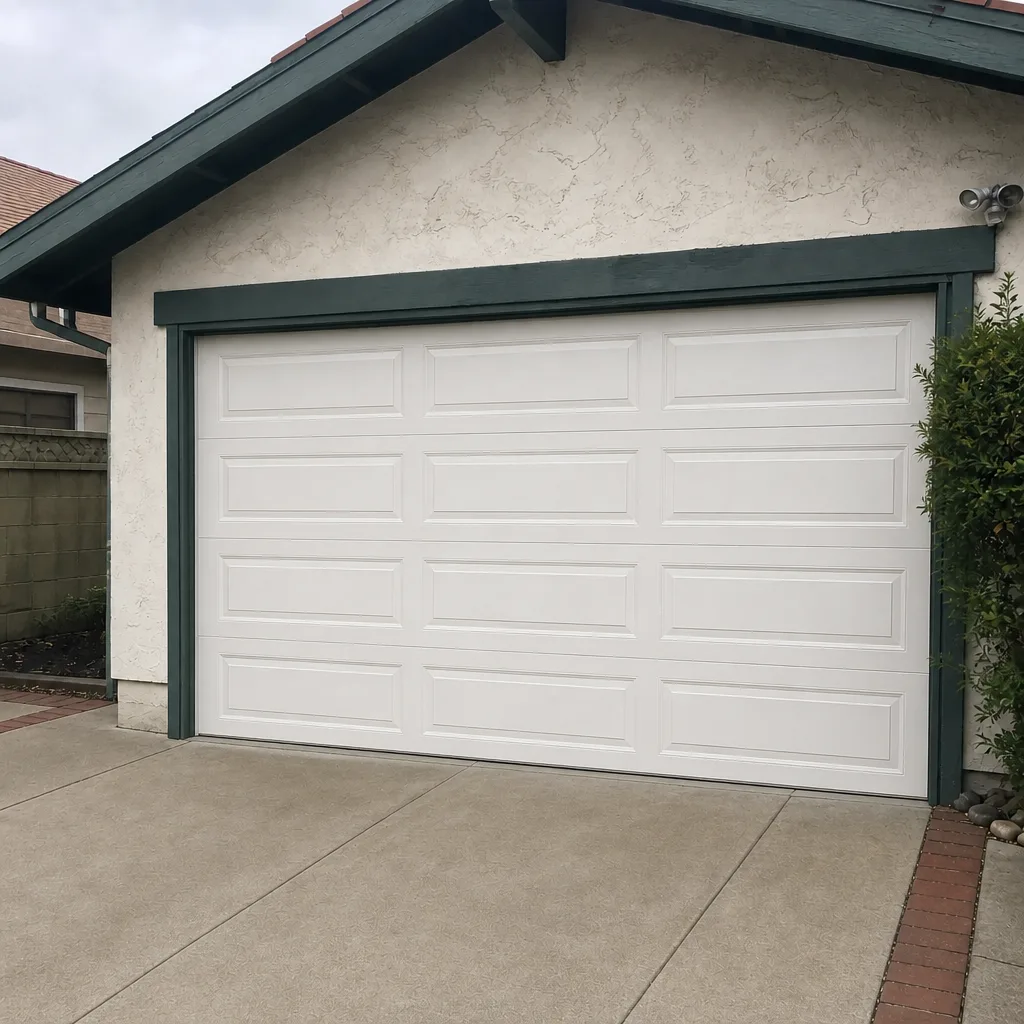 After
When to Call a Professional
Some situations don’t improve with patience or YouTube. If you see a broken spring, a slack cable, a bent track, or a door that binds partway through its travel, that’s the signal to stop touching it and make a call. The same goes for a door that fell hard, an opener that smoked or sparked during a power surge, or any situation where the door hangs at an angle. These are mechanical failures that get worse with use, and each cycle adds damage.
Garage Door Repair Valencia offers free estimates in Valencia. We work on the brand you already have, whether that’s LiftMaster, Chamberlain, Genie, Clopay, Amarr, Wayne Dalton, Craftsman, or Raynor. From a jammed opener to a full new door, garage doors are all we do. Call (833) 754-9103. We answer 24/7. Fast dispatch from 7am to 7pm, Sunday through Friday. Your written estimate covers the full price, agreed before any work begins.
Frequently Asked Questions
How do I open my garage door when the power is out in Valencia?
Pull the emergency release cord hanging from the opener rail, then lift the door by hand. If the door is balanced, it will open smoothly. If it’s heavy or binds, stop and call for help rather than forcing it.
Does my California garage door opener have a backup battery?
If your opener was sold or installed in California after July 1, 2019, state law requires it to have a battery backup. If it’s older, it may not. Test any backup battery by unplugging the opener and running the door twice at full speed.
What should I check after an earthquake before opening my garage door?
Check that the tracks are parallel, the cables are taut, the spring is intact, and the door lifts manually without binding. If any of those checks fail, leave the door closed and call a professional.
My garage door won’t close after a wind storm. What’s wrong?
Most likely the safety sensors near the floor got knocked out of alignment. Check those first. If they’re clean and aligned, look for a bent track, a slack cable, or a dented panel. Any of those can stop the door from closing.
How do I secure a garage door that’s stuck open after a disaster?
Lock the interior door between the garage and house first. Then anchor the bottom of the stuck door so it can’t drop, padlock through the track holes if possible, and cover the opening with plywood or a tarp if the door is beyond use.
Will the price change once you see the door?
No. The estimate is free and the written price you agree to before we start is the price you pay. We don’t add surprise charges after the fact.
The Bottom Line
Valencia homeowners face garage door emergencies that generic preparedness guides don’t cover. PSPS outages kill your opener’s power. Earthquakes warp door frames and tracks. Santa Ana winds knock sensors out of alignment and send debris into door panels. The solutions are specific: test your manual release before you need it, verify your backup battery under load, know the five-step post-earthquake inspection, and understand the sensor-track-cable priority order after a wind event. Most important, know when to stop and call for help. Some repairs are safe to attempt. Torsion springs and cables are not among them. Call (833) 754-9103. We answer 24/7. Fast dispatch from 7am to 7pm, Sunday through Friday.
Written by the team at Garage Door Repair Valencia, serving Valencia since 2011.