
Last updated November 4, 2026
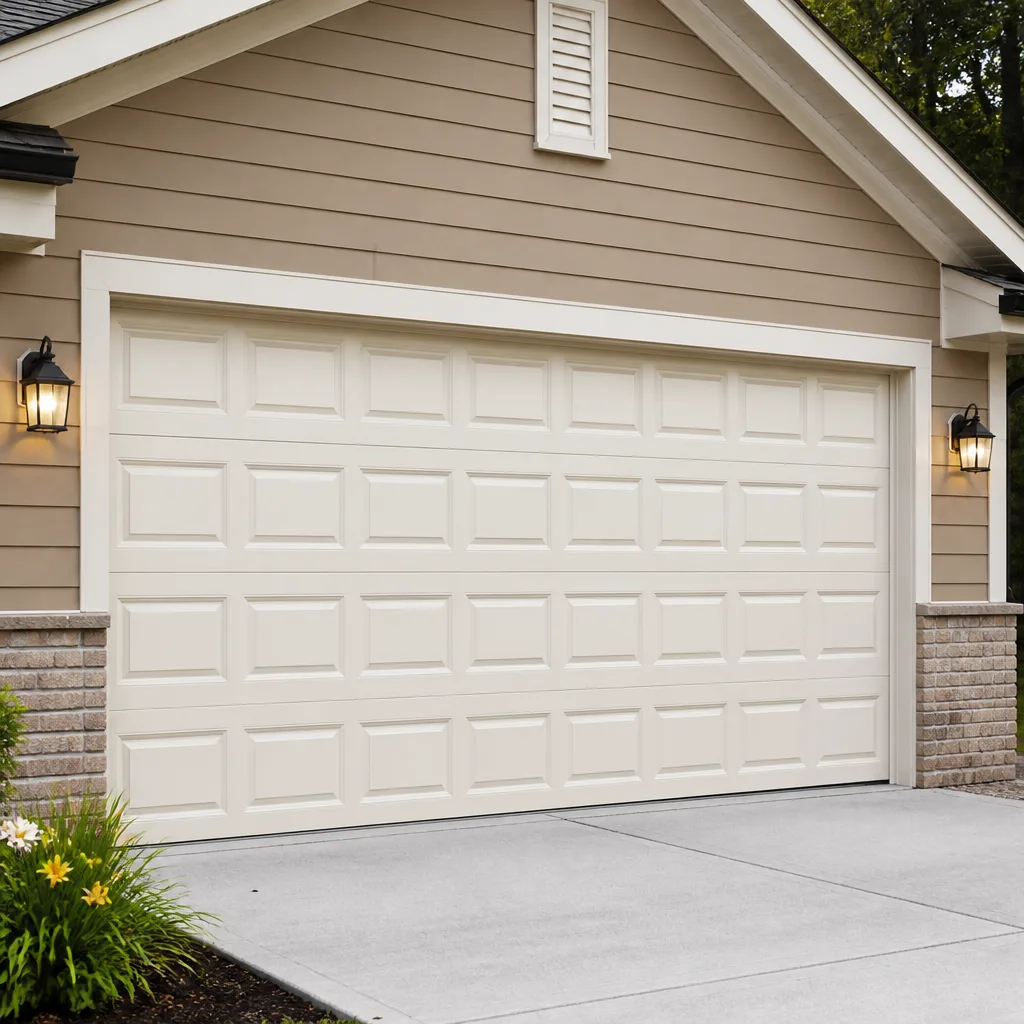 Raised-panel steel
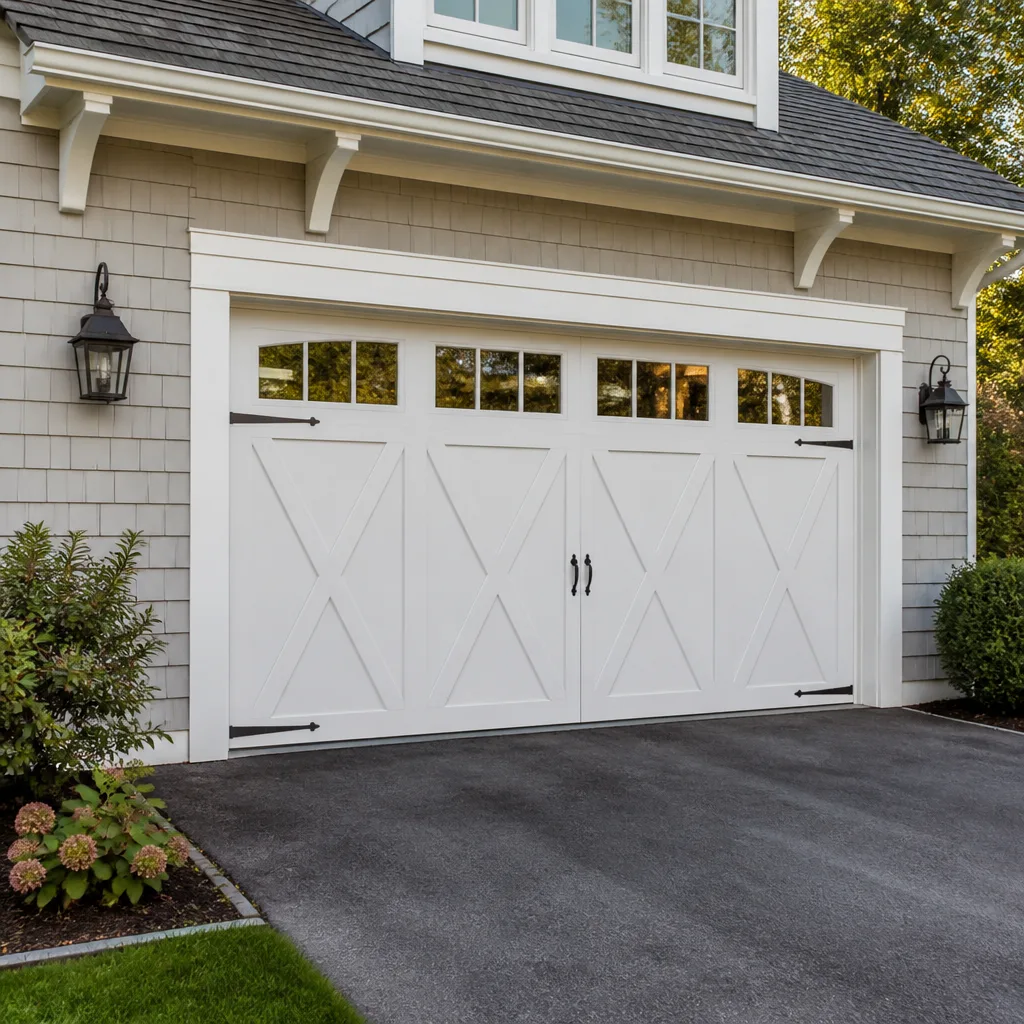 Carriage house
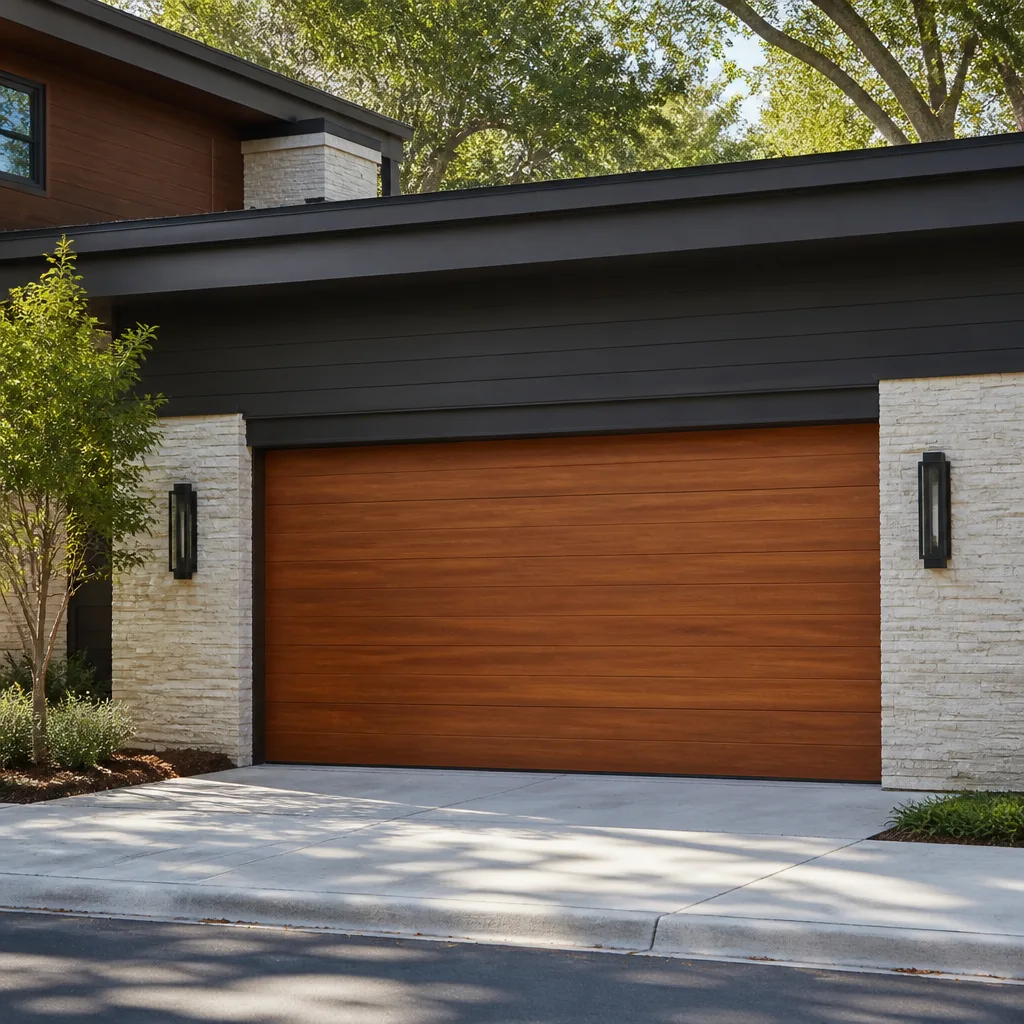 Modern flush
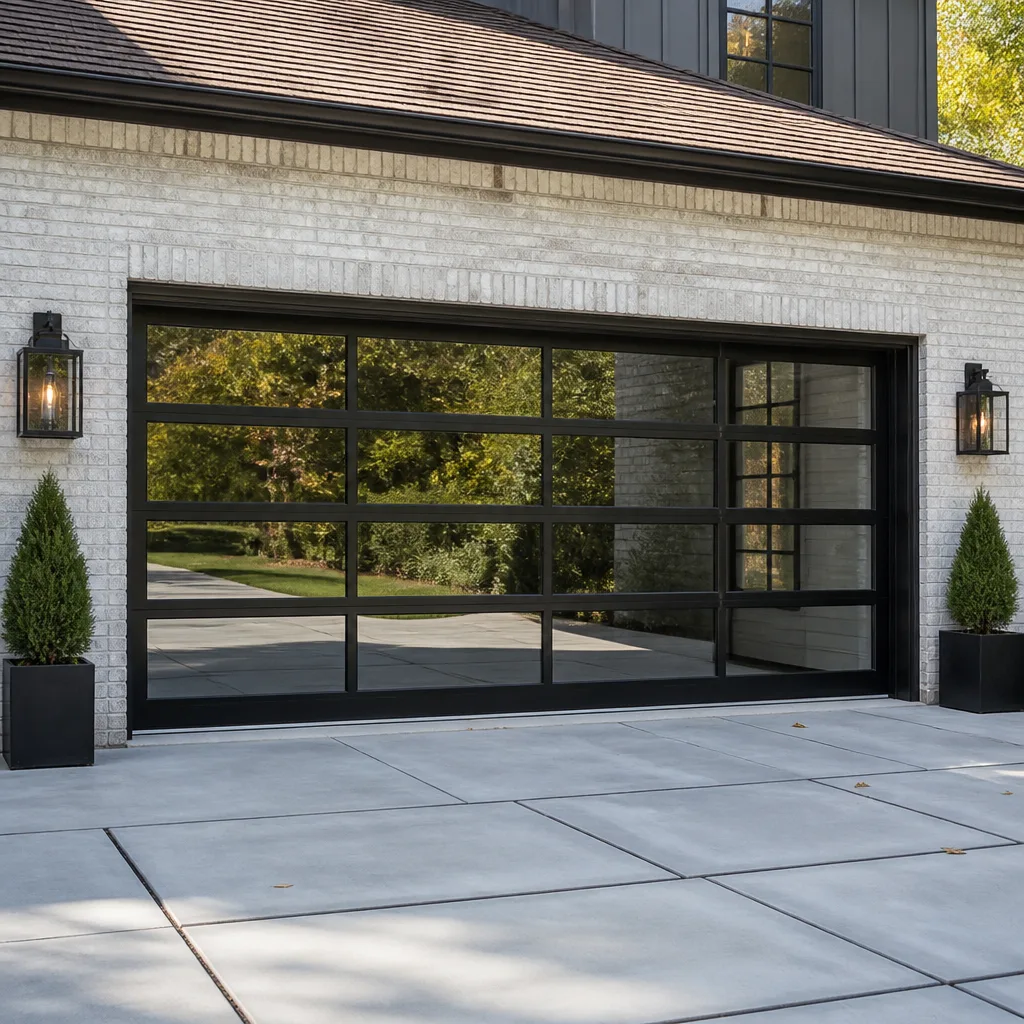 Full-view glass
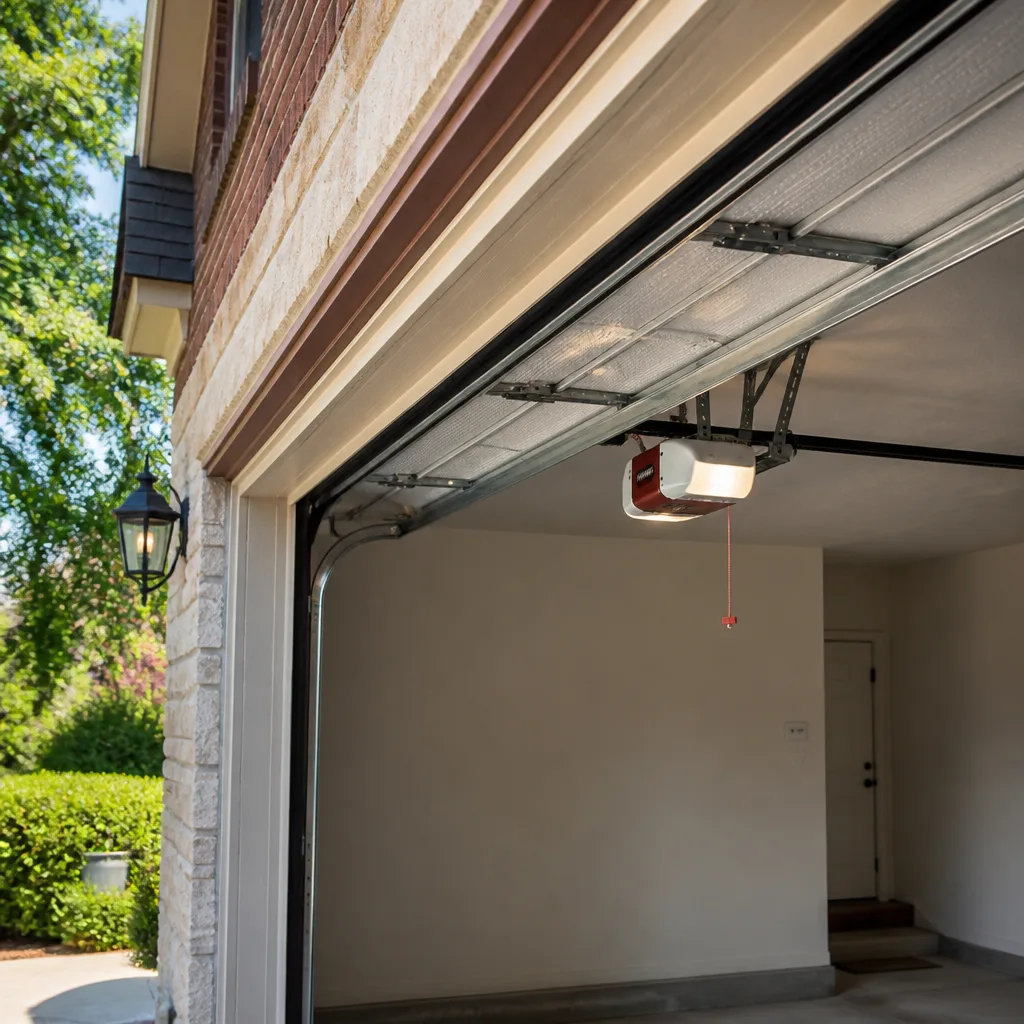 LiftMaster openers
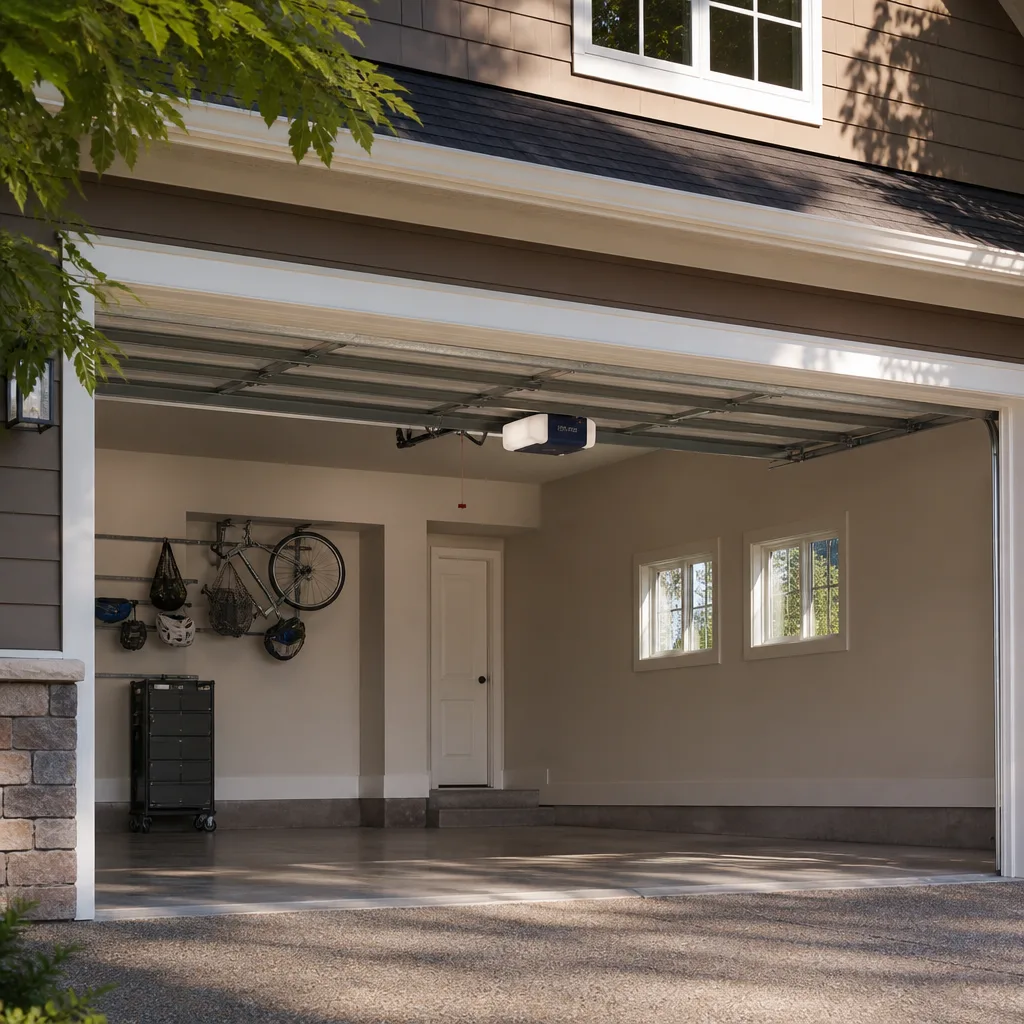 Chamberlain openers
Full 25-point door and opener safety check with every visit - springs, cables, rollers, tracks, and your LiftMaster or Chamberlain opener included
You get a price before we start. It does not change when the truck arrives.
Get your free estimateGarage Door Warning Signs: A Valencia Homeowner’s Reference Guide
A grinding noise from your garage door opener sounds like a motor problem. In most cases we see across Valencia, it’s actually a worn drive gear, a small internal part that homeowners let run until it chews through the worm gear and turned a simple fix into a full opener rebuild. The pattern repeats constantly: a sound gets ignored, a feel gets rationalized, and a warning becomes a failure. You don’t need to be a technician to catch these signs early. You need to know what’s normal for your system, what isn’t, and which symptoms mean stop using the door today versus schedule a repair this week. This guide gives you that context, built from years of working on garage doors throughout Valencia’s neighborhoods, from Copper Hill to Tesoro del Valle.
Quick Answer
The most common garage door warning signs in Valencia are grinding or scraping noises during operation, a door that feels heavier than it used to, cables that show visible fraying near the drum, an opener that hesitates or lags after you press the remote, and visible gaps or rust on torsion springs. Any of these indicates a component is degrading. A cable with broken strands or a spring with a visible gap means stop using the door immediately and call for garage door repair.
Styles & brands we work with
- Raised-panel steel
- Carriage house
- Modern flush
- Full-view glass
- LiftMaster openers
- Chamberlain openers
Table of Contents
- What That Sound Actually Means
- The Door That Feels Heavier: A Critical Spring Warning
- Cable Inspection: Where Fraying Hides
- Opener Lag: Logic Board, Battery, or Interference?
- Stop Now vs. Schedule This Week
- Visual Spring Check: Gaps and Rust You Can See
- How Valencia’s Climate Affects Your Door
What That Sound Actually Means
Garage doors are not silent machines. A certain amount of mechanical sound is normal, especially on older systems. The problem is that different failing components produce overlapping sounds, and homeowners routinely misidentify the source. A worn drive gear in a Genie opener can sound almost identical to a failing LiftMaster motor bearing. A loose chain on a Chamberlain belt-drive opener makes a rattle that gets mistaken for track misalignment. Here’s what the sounds generally indicate, based on the systems we work on every day in Valencia.
A grinding noise that comes from the opener motor housing, not the door itself, usually means the drive gear inside the opener has begun stripping. This is common on Raynor, Genie, and older LiftMaster units with plastic drive gears. The gear teeth wear down, the motor spins, and the remaining partially stripped teeth produce a grinding or chewing sound. If you catch it early, the gear alone gets replaced. If you let it run, the stripped gear damages the worm gear above it, and you’re into a more involved garage door opener repair.
A popping sound during operation is almost always spring related. Torsion springs wind and unwind as the door moves. When a spring begins failing, the coils can bind and release suddenly, producing a sharp pop. This is different from the steady creak of a spring that simply needs lubrication. A popping spring is telling you the metal is fatiguing, and the spring will not last long. In Valencia’s dry climate, rust moves slower than it does in humid regions, but metal fatigue doesn’t need rust. A spring under constant tension eventually fails from the load cycles alone.
A scraping sound that comes from the sides of the door usually means a roller or hinge is dragging against the track. On some Valencia homes with older steel tracks, the track itself can develop a burr from repeated roller contact. A scraping sound that comes from the center of the door near the floor often means the bottom weather seal has hardened and is dragging against the concrete, which is common after several summers of dry heat.
A rattling sound during travel usually comes from loose hardware: hinge bolts, track brackets, or opener-chain tension. On multi-panel doors, loose hinges let panels shift slightly as the door moves, producing a metallic rattle. That same rattle on the opener rail usually means the chain needs adjustment. Both issues are straightforward repairs if caught before the loose hardware causes accelerated wear on other components.
The Door That Feels Heavier: A Critical Spring Warning
A garage door that works correctly should feel nearly weightless when you lift it manually. The springs carry the weight of the door, not you. If you disconnect the opener and lift the door by hand, a properly balanced door will hold its position at about waist height without falling or rising on its own. If your door suddenly feels heavier, or you notice the opener motor straining more than it used to, the springs are losing tension. That’s not an inconvenience. That’s the single most reliable warning sign that a spring is nearing failure.
Torsion springs are rated for a specific number of cycles, and each time the door opens and closes, one cycle gets used. The average home in Valencia cycles its door three to five times per day. Over fifteen years, that’s roughly 16,000 to 27,000 cycles. Most residential springs are rated for 10,000 cycles on the low end. The point: springs fail from normal use, and the failure is predictable. When a spring loses tension, the door gets heavier because the motor and your back are doing work the spring used to do.
The ten-second balance test will confirm what you’re feeling and takes a moment to perform correctly:
- Pull the red emergency release cord on your opener while the door is closed. The door will disconnect from the motor and move freely by hand.
- Lift the door manually to about waist height, then let go.
- If the door stays in place, the springs are doing their job.
- If the door falls, the springs are weak or broken. If the door rises on its own, the springs are over-tensioned, which is equally hard on the opener.
- Reconnect the door to the opener by running the motor until it latches back onto the carriage.
When a spring cannot hold the door’s weight, the opener motor works harder on every cycle. That overwork shortens the life of the drive gear, the motor, and the opener’s logic board. A heavy door is a spring problem that is actively creating an opener problem. In our experience, the homeowner who notices the heavier door and calls early gets a spring replacement. The homeowner who ignores it for a few more weeks usually calls for a spring and an opener repair together.
Cable Inspection: Where Fraying Hides
The cables on a sectional garage door are under constant tension, just like the springs. They wrap around a drum at each end of the torsion bar and attach to the bottom bracket of the door. When a cable fails, the door drops unevenly. In the worst case, the door comes off the track entirely. Cables almost never snap without showing visible warning first, but only if you look in the right places.
The spot most homeowners never look at is the cable drum itself. The drum is the grooved wheel at the top of the torsion bar, above the door opening. Cables fray where they wrap onto and off the drum because that’s the point of highest friction. Look for loose strands that have separated from the main cable. Even one or two broken strands means the cable’s strength is compromised. The second spot is the bottom bracket, where the cable attaches near the floor. This area collects dust, and broken strands are easy to miss against the door’s shadow line.
To inspect your cables properly:
- Close the door completely and look at the drums at the top of the opening.
- Check the cable where it wraps onto the drum for any loose or separated strands.
- Follow the cable down the side of the door to the bottom bracket.
- Look for kinks, flat spots, or a cable that appears to have rust staining in the strands.
- Check that both cables have the same amount of tension. If one side is visibly looser, the door is pulling unevenly, which wears every component faster.
Never touch a cable that shows signs of damage. The cables carry spring force, and a damaged cable that lets go while you’re near it can cause serious injury. If you see broken strands on either cable, stop using the door and call for service. We work on doors throughout Valencia with every cable configuration, including the lift cables on heavier Clopay and Amarr doors that put more stress on the bottom brackets.
Opener Lag: Logic Board, Battery, or Interference?
A remote that takes three presses before the door responds is annoying, but the cause is not always what homeowners assume. The three most common causes of opener lag in Valencia are a failing logic board, a remote battery that’s near the end of its life, and radio frequency interference from newer smart home devices. The trick is that all three feel the same from inside the garage, and replacing the wrong component fixes nothing.
Start with the easiest test. If the wall button inside the garage opens the door instantly but the remote lags, the problem is not the logic board. The wall button sends a hardwired signal, so a responsive wall button means the opener’s brain is working. The lag lives in the wireless signal. That narrows it to the remote battery, the remote itself, or interference between the remote and the opener’s receiver.
Battery failure is the simplest explanation and the easiest fix. Replace the battery and test from the same distance. If the lag disappears, you’re done. If not, think about what’s changed in your home recently. New LED bulbs in the garage, a Wi-Fi range extender, a baby monitor, or a smart home hub can all broadcast on frequencies that overlap with older opener remotes. Chamberlain and LiftMaster openers using older 315 MHz technology are particularly susceptible to interference from modern LED garage lights, which generate noise on nearby frequencies. The fix in that case is usually swapping the bulbs or moving the device, not replacing the opener.
If the wall button also lags, or the opener sometimes runs without being commanded, the logic board is likely failing. Genie and Raynor units from the last decade have circuit boards that suffer from gradual capacitor degradation, especially in garages that get hot. Valencia summer temperatures regularly push garage interiors past 100 degrees for hours at a time, and that heat accelerates every electronic component in the opener. A failing logic board often shows other signs too: the opener forgets its limit settings, the lights flicker, or the opener runs but the remote range drops to a few feet. When the board is failing, the right fix is replacing the board or the opener, whichever makes more sense for the unit’s age. We handle that decision case by case, brand by brand, because the economics differ between a $200 LiftMaster board and a $150 Chamberlain board.
Stop Now vs. Schedule This Week
Not every warning sign is an emergency. Some allow a scheduled repair window. Others mean the door is dangerous and should not be operated again until a technician has assessed it. Homeowners in Valencia often ask us how to tell the difference, because nobody wants to overreact. The short version is this: if the door’s structural load-bearing components have visible damage, stop using it. If the problem is noise or lag, you have time, but not unlimited time.
Stop using the door immediately if:
- You see broken strands on either lift cable.
- A torsion spring has a visible gap between the coils.
- The door only opens a few inches and stops, then reverses.
- One side of the door hangs noticeably lower than the other.
- The door fell or slammed shut on its own.
A spring with a visible gap has already failed structurally. The two halves of the spring are no longer transferring tension correctly, and the remaining load is concentrated on a weakened section of metal. That spring can break completely at any moment, and when it does, the door drops. A cable with broken strands is equally dangerous. The cable carries the spring’s energy to the door. When it snaps, the release is violent and unpredictable.
Schedule a repair this week if:
- The door grinds, pops, or rattles but still opens and closes fully.
- The remote lags but the wall button works.
- The door feels heavier but still holds its position during the balance test.
- You see surface rust on springs or hardware but no gap in the coils.
- The door shudders during travel but stays on the track.
A grinding opener that still moves the door will continue to move it until the stripped gear fails completely, which usually happens at the worst possible moment. The homeowner who schedules that repair during the week avoids the day when the opener quits with the door half-open and a car stuck inside. A heavy door that still balances will worsen gradually, but every cycle shortens the remaining spring life. Schedule the repair before the spring decides the schedule for you.
Visual Spring Check: Gaps and Rust You Can See
You can assess your torsion springs without touching them, and you should do it every few months. The check takes less than a minute and catches the two visible warnings that precede most spring failures: a gap between coils and rust at the spring’s midpoint.
Stand inside the garage, with the door closed, and look up at the torsion bar above the opening. On most residential doors in Valencia, you’ll see one or two springs, each about two to three feet long, wrapped around the bar. A healthy spring is a continuous coil with each loop touching the next. A failed spring has a visible gap, usually one to two inches wide, where the coil has separated. That gap means the spring has snapped and the two sections are no longer connected. On a two-spring setup, one spring on one side may look intact while the other is broken. Compare them. If one has a gap and the other doesn’t, the broken spring is obvious.
Rust is the second visible warning. In Valencia’s climate, we don’t deal with the heavy corrosion found in coastal cities, but garages still trap moisture, especially in the winter months when the air is cooler and denser. Surface rust on a spring is not an immediate failure, but it does two things: it roughens the metal surface, which increases friction between coils as the spring winds and unwinds, and it signals that the spring’s protective coating has worn away. A spring with significant rust, especially rust that has pitted the surface, should be replaced. The rust weakens the metal structure regardless of how many cycles remain on the specification sheet.
Never attempt to repair, replace, or adjust a torsion spring yourself. The springs store the energy required to lift a door that weighs between 130 and 400 pounds. A spring under tension stores enough force to cause severe injury if it releases unexpectedly. Trained technicians use specific winding bars and follow a precise sequence to replace springs safely. If your visual check reveals a gap or significant rust, call a professional and keep the door closed until service arrives.
How Valencia’s Climate Affects Your Door
Valencia sits in the Santa Clarita Valley, and the climate here does specific things to garage door components. The dry, hot summers and cool winters create a temperature swing that stresses metals and electronics differently than a coastal climate. Understanding those local factors helps homeowners interpret what they’re seeing on their own doors.
Summer heat is the biggest environmental factor. Garage interiors in Valencia routinely exceed 100 degrees during July and August, especially in homes with west-facing garage doors. That heat expands the metal in the track, the torsion bar, and the springs. It also accelerates the breakdown of plastic components inside openers: drive gears, belt sprockets, and circuit board capacitors all degrade faster in sustained heat. A Genie opener that’s been baking in a hot garage every summer for ten years will often fail at its drive gear or its logic board first, because those are the components most sensitive to heat. Homeowners who park a hot car in the garage compound the problem, since the car radiates heat into the space for hours after parking.
Winter here is mild, and we don’t deal with the freeze-thaw cycles that affect garage doors in colder climates. The temperature rarely approaches freezing, so the steel components don’t undergo the expansion-contraction cycling that causes metal fatigue in northern states. What winter does bring is longer periods of garage closure. In summer, many Valencia homeowners leave the garage open briefly during the day for ventilation. In winter, the door stays closed, and any moisture in the air gets trapped. That trapped moisture accelerates surface rust on springs and hardware, especially in homes where a water heater or washer-dryer sits in the garage and adds humidity to the space.
Dust is the third local factor. The Santa Ana winds in fall carry fine dust that settles on everything, including the moving parts of a garage door. Dust mixes with the grease on rollers and hinges, creating an abrasive paste that accelerates wear. Doors near open fields, on the edges of Valencia’s newer developments, collect more dust than doors in the center of established neighborhoods. A roller that wears faster because of dust is a roller you’ll hear before it fails, and the fix is straightforward when caught early.
None of these factors mean Valencia homeowners need special doors. They mean the inspection schedule matters here. A door that goes three years without a visual check in this climate is a door with accumulated dust in the rollers, sun-degraded weather seal, and a drive gear that’s seen several thousand hours in a hot garage. Quick checks catch what Valencia’s climate does before it becomes a failure.
Common Mistakes to Avoid
- Ignoring a heavier-feeling door. This is the most expensive mistake we see in Valencia. A heavier door means a spring is failing. Every week of ignoring it multiplies the repair cost as the opener motor and drive gear take on the extra load. The balance test takes ten seconds.
- Lubricating a popping spring. A popping sound is not a dry spring. Lubrication will not stop a spring from failing. It might mask the sound for a day or two, but the metal fatigue continues, and you’ve lost the warning signal.
- Replacing the remote before checking the wall button. A lagging remote with a working wall button is almost never a logic board problem. Homeowners replace the remote, then the opener, when the issue was an LED bulb or a dead battery. Start with the hardwired signal test.
- Forcing the door when it binds. If the door stops mid-travel and you keep pressing the remote or holding the wall button, you’re asking the opener to push against a mechanical problem. That’s how a bent track becomes a stripped gear and a bent door panel. Stop pressing when the door binds.
- Checking only one side of the door. Cables and rollers wear unevenly. A left-side cable can be fraying while the right side looks perfect. Check both drums, both cables, and both bottom brackets every time.
- Waiting until a failure to find a repair company. When a spring breaks at 7am on a Sunday before work, you don’t have time to research who to call. Know who services your door before you need them. Garage Door Repair Valencia works on every major residential brand, so knowing us means the brand conversation is already handled.
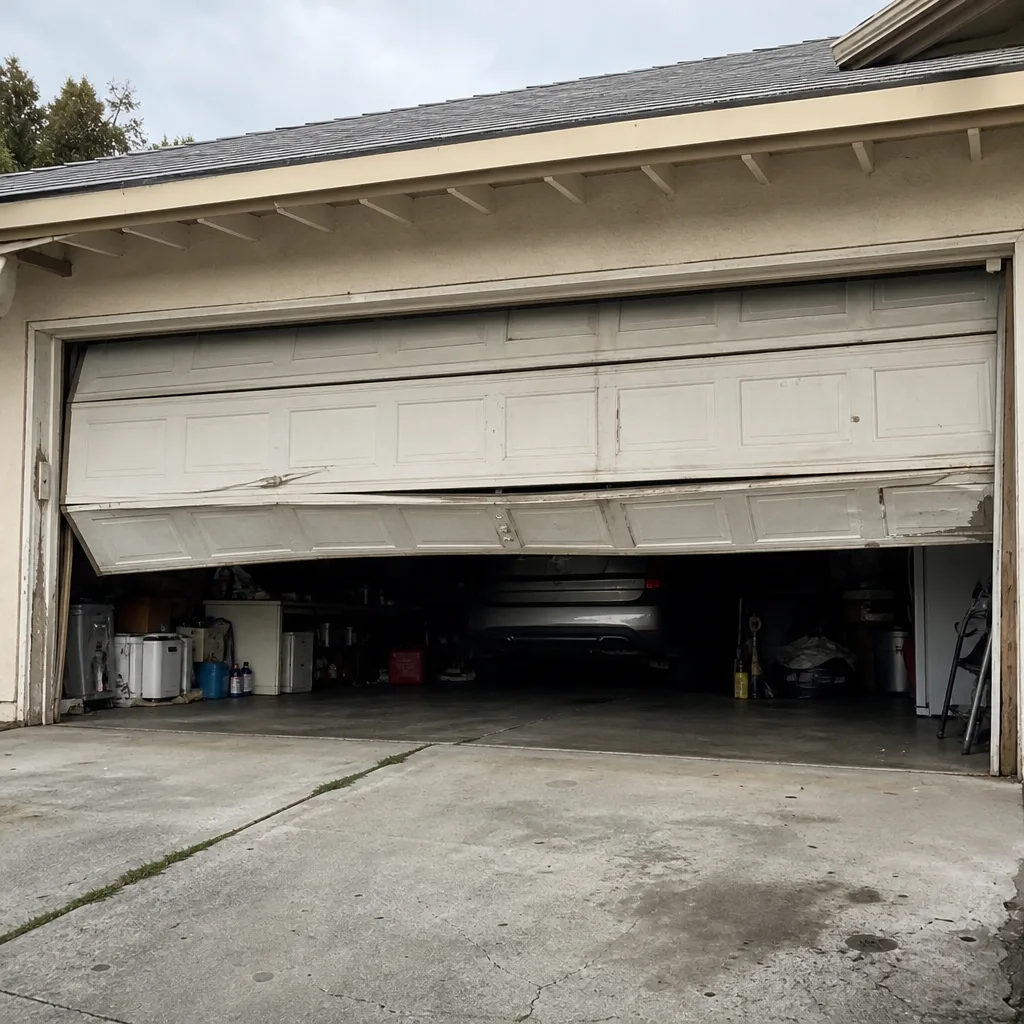
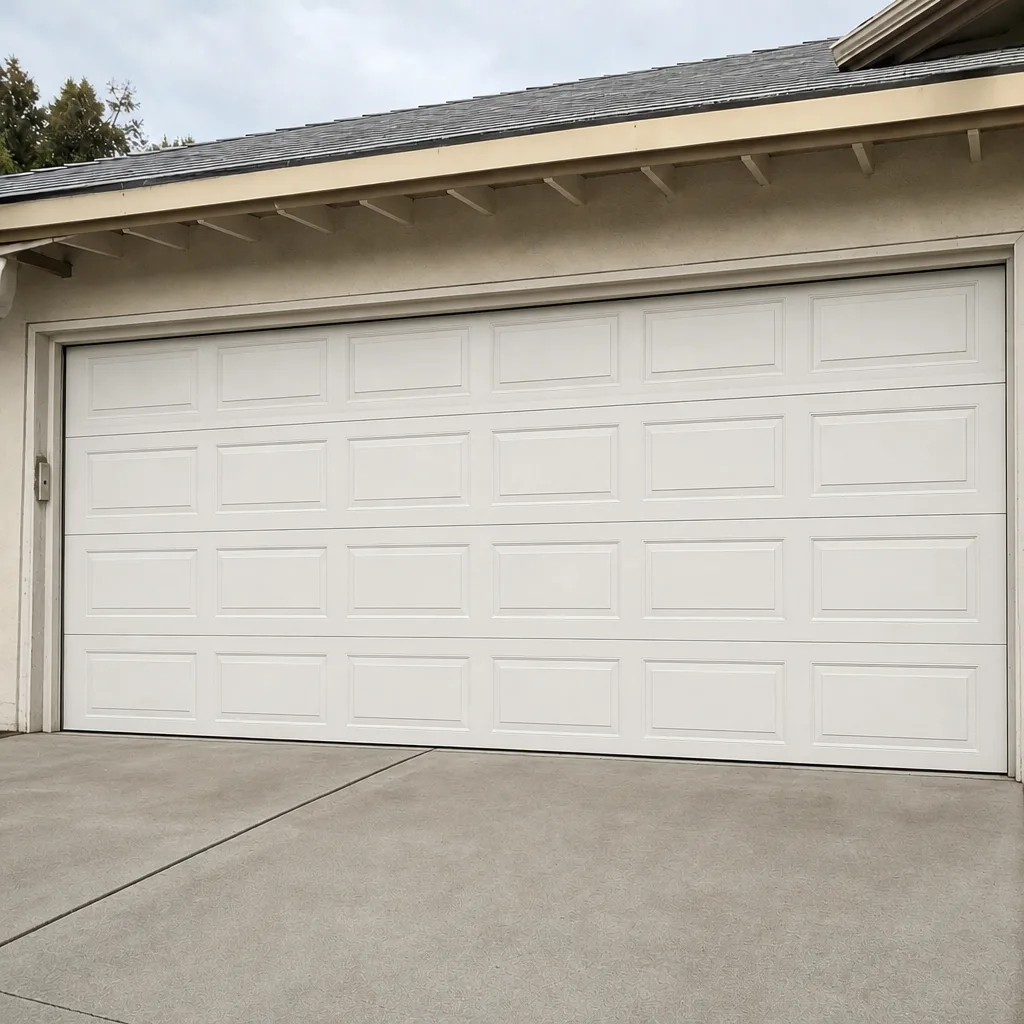
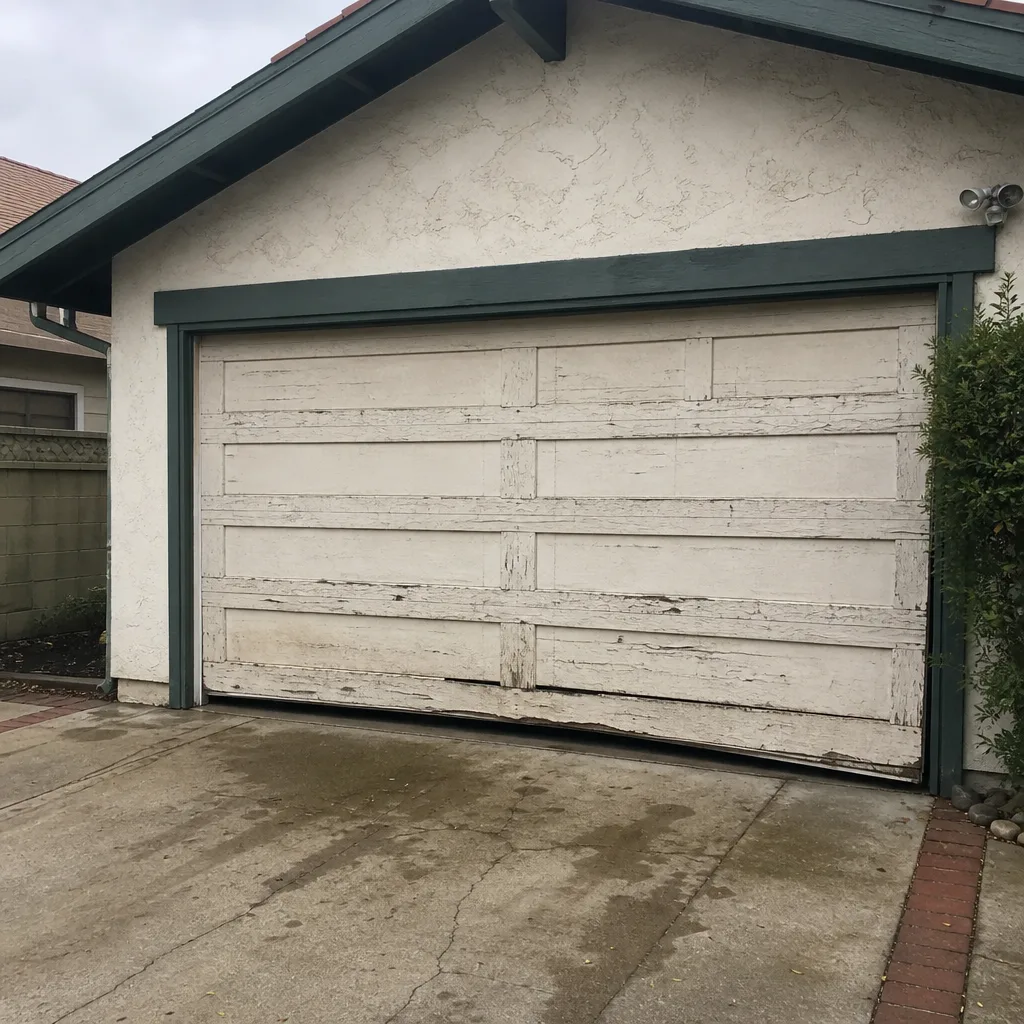
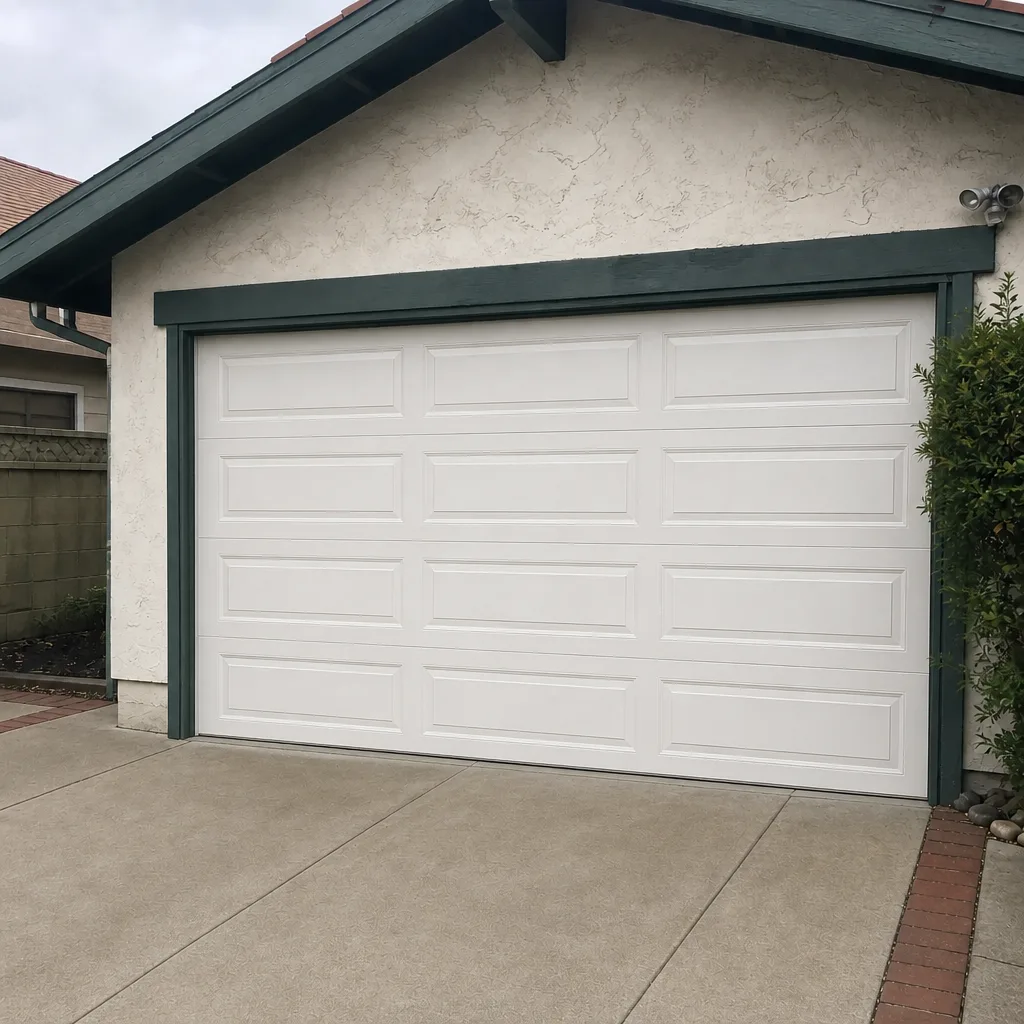
See the difference
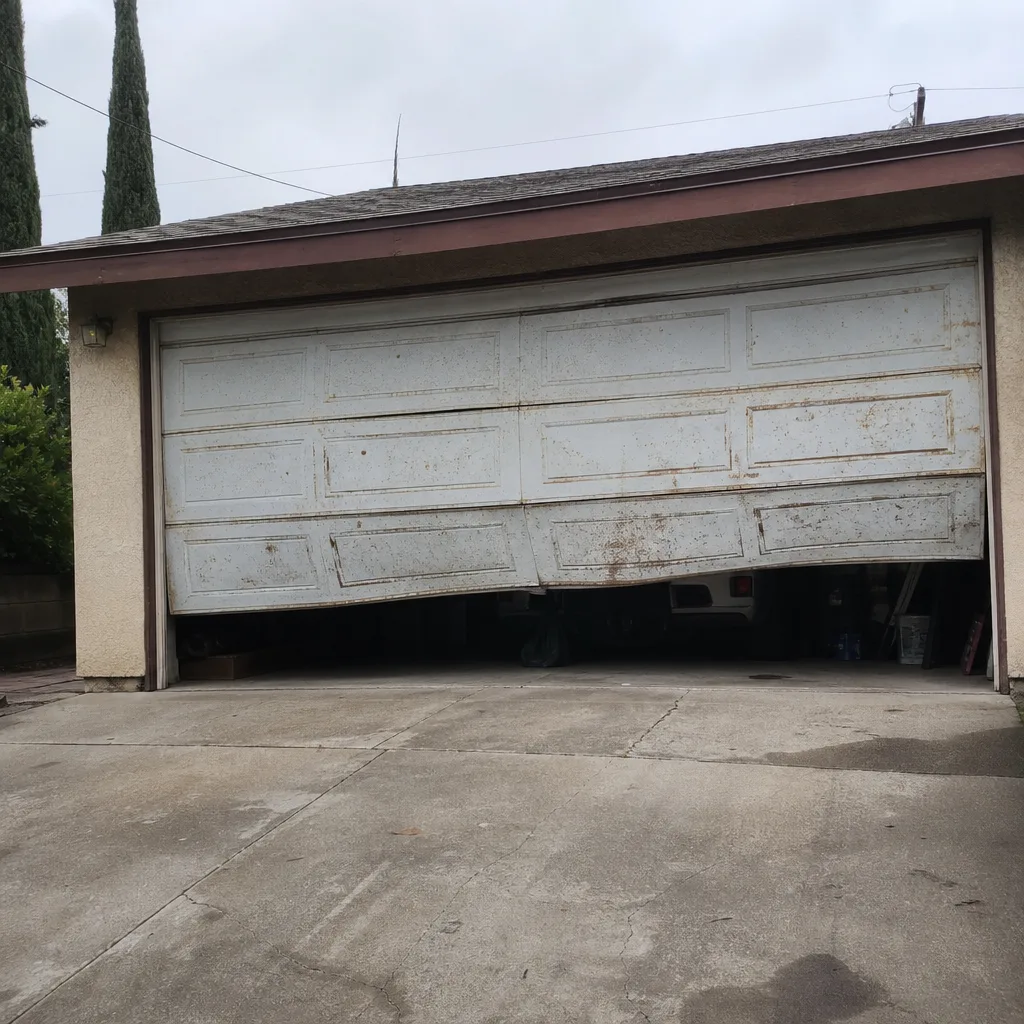 Before
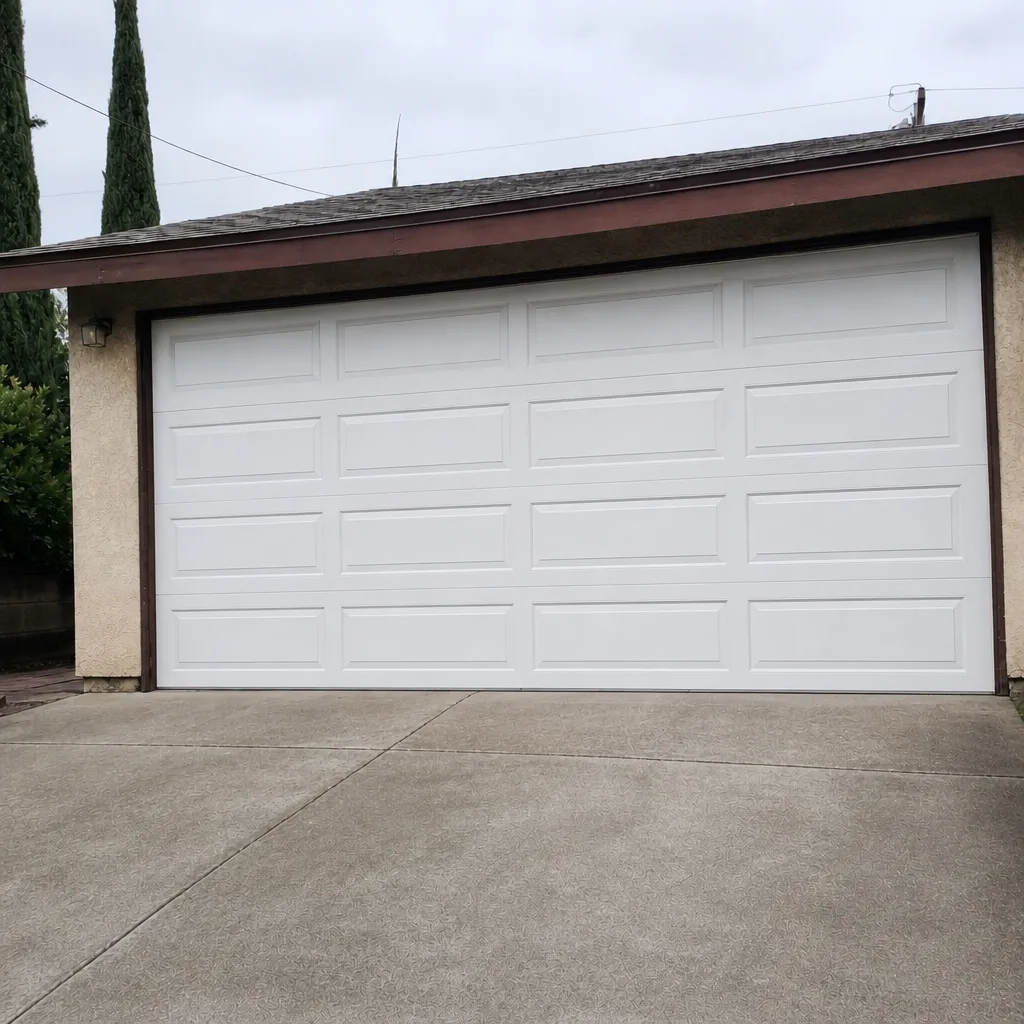 After
 Before
 After
 Before
 After
When to Call a Professional
A broken spring, a frayed cable, or a door off its track are not DIY projects. The spring and cable system stores enough tension to lift hundreds of pounds, and a spring that releases unexpectedly can cause severe injury. If your balance test shows the door falling, if you see a gap in a spring coil, or if you see broken strands on a cable, stop using the door and call a technician. If your opener grinds, lags, or runs erratically, the repair usually involves components that are brand-specific: a Genie drive gear is not interchangeable with a Chamberlain, and the right diagnosis depends on knowing how each brand’s opener is built. Garage Door Repair Valencia offers free estimates in Valencia, and we work on the brand you already have, from a jammed LiftMaster gear to a full new Raynor door. Call (833) 754-9103. We answer 24/7. Fast dispatch from 7am to 7pm, Sunday through Friday.
Frequently Asked Questions
The most common warning signs are a grinding noise from the opener, a door that feels heavier than it used to, visible cable fraying near the drum, a popping sound from the springs, and remote lag when the wall button still works. Any of these means a component is degrading and should be checked before it fails completely.
Repair costs vary by the component and the brand, but a single torsion spring replacement typically falls in the range of $220 to $380 in Valencia, or $440 to $760 for a matched pair, while a drive gear replacement on an opener usually runs $140 to $260. The written estimate sets the final price before any work begins. Call (833) 754-9103 for free estimate on your specific door.
In most cases, yes. We answer 24/7 and dispatch technicians from 7am to 7pm, Sunday through Friday. A call outside dispatch hours is booked into the next opening. Garage doors are all we do, so the truck carries the common parts for the brands most Valencia homes use.
No. The price is quoted and agreed before any work starts. If we find an additional problem during the repair, we stop and show you what we found before doing anything else. You never get an invoice bigger than the quote unless you approved the extra work.
Not usually. A lagging remote with a working wall button is often a dead remote battery or RF interference from a new LED bulb or smart device, not a failing opener. If the wall button also lags, the logic board may be failing. We diagnose the signal path before recommending any replacement, because we fix the opener you have rather than steering toward a new unit.
We work on eight major residential brands, including LiftMaster, Chamberlain, Genie, Clopay, Amarr, Wayne Dalton, Craftsman, and Raynor. That covers most residential systems in service today. We don’t push a brand. We find the right part for your specific model.
Once a year is reasonable for most Valencia homes. The dry heat, dust, and temperature swings here wear rollers, springs, and opener components at a predictable rate, and a quick annual inspection catches the early warning signs before they become failures. A visual check you do yourself every few months is also worth the time.
The Bottom Line
Garage doors fail on a schedule, not by surprise. The warning signs are audible, visible, and tactile if you know what to look for: a grinding opener gear, a popping spring, a fraying cable, a door that feels heavier. The skill is in reading those signs correctly and acting before a $40 part becomes a $300 repair, or a heavy door becomes a dropped door. You don’t need to replace a door that can be repaired, and you don’t need to guess at the problem when a few quick checks narrow it down. The biggest mistake we see in Valencia is waiting. The second biggest is misreading the symptom. Both are fixable with a little knowledge and the right call at the right time. Call (833) 754-9103 for a free estimate. We answer 24/7, and we’ll tell you what’s actually wrong, brand by brand, part by part.
Written by the team at Garage Door Repair Valencia, serving Valencia since 2011.